What Is Ceramic Window Tint? An Essential Guide for Vehicle Owners
Driving in the Greater Los Angeles area means dealing with high temperatures, persistent sun exposure, and heavy glare. While standard window tint offers basic privacy, standard films often fall short when it comes to keeping your vehicle cabin cool. If you are researching what is ceramic window tint, this guide breaks down how the technology works, how it compares to other tint options, and why it is one of the most effective upgrades for your car.
Legacy Mobile Tints provides professional mobile window tinting services across the San Gabriel Valley and surrounding Los Angeles communities, including Pasadena, Glendale, Burbank, Arcadia, Alhambra, Monterey Park, Montebello, South Pasadena, and San Marino. We bring shop-grade tint installations directly to your home or office address.
How Ceramic Window Tint Works
To understand what sets ceramic window film apart, it helps to examine how window tinting technology has evolved over the years. Traditional window films rely on dark dyes or metallic particles to block visible light. Ceramic tint utilizes advanced nano-technology to manage solar energy.
Non-Metallic Nano-Ceramic Technology
Ceramic window film is manufactured with microscopic ceramic particles that are non-metallic and non-conductive. Because these particles are far smaller than the wavelength of visible light, the film remains optically clear while actively absorbing and reflecting solar radiation. Since there is no metal in the film, it will not corrode, fade to purple, or interfere with electronic signals.
Heat Rejection Independent of Shade
A widespread myth about window tint is that dark film is required to block heat. Traditional dyed film relies on dark shades to absorb visible light, but it lets infrared heat pass through glass easily. Ceramic film functions differently. It targets infrared radiation, which is the primary cause of solar heat build-up inside a vehicle. Because heat rejection is managed at a microscopic level, you can choose a lighter shade and still block more heat than a dark, low-quality dyed film.
Key Benefits of Installing Ceramic Window Tint
Upgrading your vehicle glass with ceramic window film provides practical everyday improvements in passenger comfort, vehicle protection, and driving clarity.
High Infrared Heat Block
Infrared light (IR) is the invisible band of solar energy responsible for heat inside your car. Ceramic film blocks up to 90 percent or more of infrared heat from entering through your auto glass. This keeps interior temperatures significantly lower when parked in direct sunlight, reducing your reliance on air conditioning and improving cabin comfort immediately upon entering your car.
99 Percent UV Ray Protection
Ultraviolet (UV) radiation causes vehicle interior materials like leather, vinyl, and plastic to crack, fade, and degrade over time. Exposure to UV rays through untreated side glass can also lead to skin damage during daily drives. High-grade ceramic film blocks up to 99 percent of harmful UV rays, helping protect both your vehicle interior and your skin health.
No Signal Interference for Electronics
Older metallic tints use thin metal layers to reflect heat, but those metal layers can interfere with radio and digital signals. This often leads to dropped cell calls, disrupted GPS navigation, weak satellite radio reception, and issues with tire pressure monitoring systems. Ceramic tint contains zero metal components, ensuring your wireless signals and onboard navigation work uninterrupted.
Reduced Glare and Clear Driving Vision
Bright sunlight during peak traffic hours and harsh headlights at night can strain your eyes and create driving hazards. Ceramic film minimizes harsh glare without creating haze or optical distortion. Whether you prefer a lighter 50 percent shade or a darker 5 percent shade, ceramic technology provides clean, crisp visibility in all driving conditions. Check out our tint options to find the shade level that best fits your vehicle.
Comparing Ceramic Tint to Carbon and Dyed Films
Selecting the right window film depends on your driving habits, budget, and performance needs. Comparing ceramic film to other common materials highlights why it stands out as the premium choice.
Dyed Window Tint
Dyed tint is an entry-level film that uses layers of colored dye to absorb solar energy and darken your windows. It provides basic visual privacy and cuts down on visible sunlight. However, dyed film offers minimal heat rejection and tends to break down under heavy California heat, often turning purple or bubbling after extended exposure.
Carbon Window Tint
Carbon window film uses carbon particles suspended within the film. It gives windows a dark, matte finish that will not fade over time. Carbon film blocks around 40 percent of infrared heat and delivers reliable UV protection. It is a durable, mid-tier option for car owners who want reliable style and decent performance at a moderate price point.
Ceramic Window Tint
Ceramic film represents top-tier window protection. It delivers maximum heat block, superior clarity, and unmatched durability against daily sun exposure. While ceramic tint involves a higher initial investment than dyed or carbon options, its performance makes it the ideal long-term choice for vehicle owners in Southern California. You can review examples of completed carbon and ceramic installations in our gallery of our work.
California Window Tint Laws
Before choosing a shade percentage for your vehicle, it is essential to understand state regulations. California law sets specific limits on window film darkness based on Visible Light Transmission (VLT), which measures the percentage of light allowed through the glass.
Windshield Regulations
In California, fully tinted film across the entire front windshield is not permitted. However, drivers are allowed to install a non-reflective tint strip along the top 4 inches of the windshield to help reduce sun glare.
Front Side Window Requirements
The front driver and front passenger side windows must allow at least 70 percent of light to pass through when combined with the factory glass tint. This ensures law enforcement officers maintain clear visibility into the front seat area of the car.
Rear Side Windows and Back Windshield
California law allows any shade level on the rear side windows and the back windshield, provided the vehicle has functional side mirrors on both sides. Drivers can choose film shades ranging from 50 percent down to 5 percent dark tint on rear windows to maximize interior privacy and heat reduction.
The Convenience of Mobile Window Tinting in Los Angeles
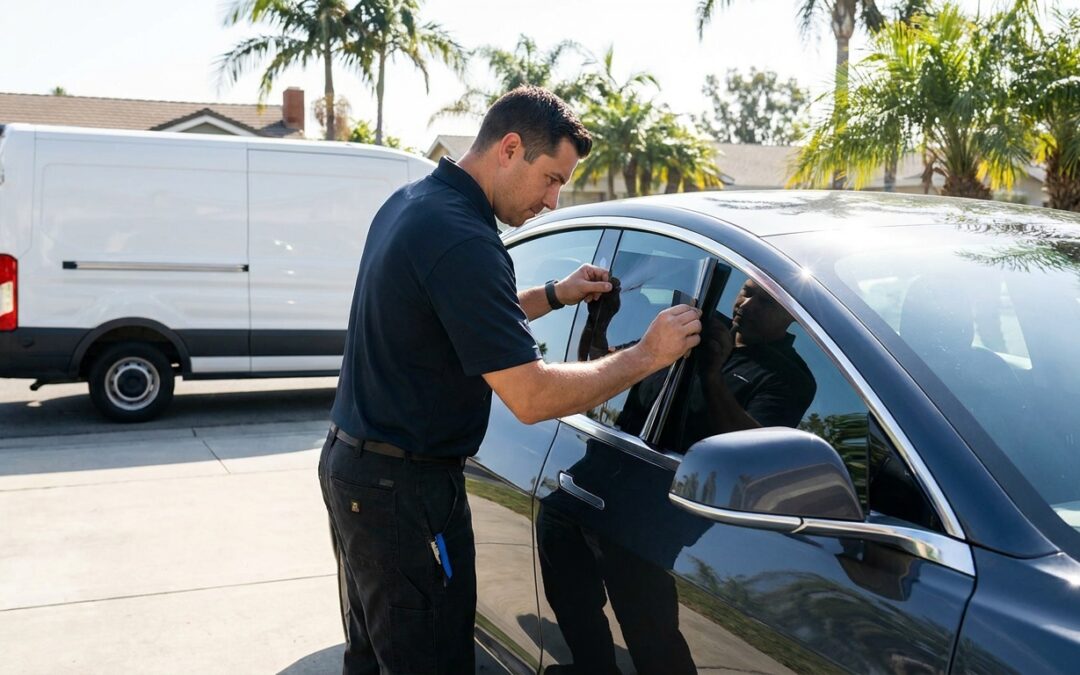
Taking a vehicle to a retail shop often means taking time off work, arranging rides, or sitting in waiting rooms for several hours. Legacy Mobile Tints eliminates that inconvenience by delivering expert mobile installation straight to your driveway or workplace parking space.
If you need expert mobile tinting in Pasadena, Glendale, Burbank, Arcadia, Alhambra, Monterey Park, Montebello, South Pasadena, or San Marino, our technicians arrive fully equipped to perform a precise installation on site.
Shop-Quality Results at Your Location
Our mobile units carry computer-cut film templates, specialized glass preparation tools, and dust-control setups to guarantee a clean, bubble-free fit. We offer both carbon and ceramic tint options ranging from 50 percent down to 5 percent darkness to match your specific preferences while staying within California legal guidelines.
Request Your Mobile Ceramic Tint Quote
If you want to keep your cabin significantly cooler, protect your interior upholstery, and reduce glare, ceramic window tint is one of the smartest upgrades you can make for your vehicle. Legacy Mobile Tints makes the process seamless by coming directly to you.
To learn more about our mobile services or to request a quote, contact Legacy Mobile Tints today at 818-605-5855 or visit our page to contact us online.