What Does VLT Tint Mean? A Guide to Window Tint Percentages
When shopping for automotive window film, you will quickly encounter the term VLT. Whether you want to block intense summer heat, cut down on solar glare, or add privacy to your vehicle, understanding what VLT means is the first step toward choosing the right window film. VLT directly affects how dark your windows look and how much light enters your cabin. It also determines whether your window tint complies with California state regulations.
Legacy Mobile Tints brings high-quality mobile automotive window tinting straight to your home or office. Serving the greater Los Angeles area—including Pasadena, Glendale, Burbank, Arcadia, Alhambra, Monterey Park, Montebello, South Pasadena, and San Marino—we specialize in carbon and ceramic window films ranging from 50% to 5% VLT. Below is everything you need to know about VLT, how to choose the right percentage, and how California tint laws apply to your vehicle.
What Is Visible Light Transmission (VLT)?
VLT stands for Visible Light Transmission. It is a measurement that indicates the percentage of visible light allowed to pass through a window film and glass combined. A light meter placed on the glass measures this percentage to determine how light or dark the window tint is.
The VLT rating operates on an inverse scale relative to darkness. A higher VLT percentage means the film is lighter, allowing more visible light into the vehicle interior. A lower VLT percentage means the film is darker, blocking more visible light from entering.
- Higher VLT Percentage (e.g., 50% to 70%): Lighter tint, high visible light transmission, minimal change to exterior appearance.
- Lower VLT Percentage (e.g., 5% to 20%): Darker tint, low visible light transmission, enhanced exterior privacy.
It is important to remember that factory glass is rarely 100% clear. Most standard vehicle windows come from the manufacturer with a slight built-in tint that permits around 70% to 80% VLT. When an aftermarket window film is installed over factory glass, the total VLT is a combination of both layers.
Understanding Standard VLT Window Tint Percentages
Window tint films are available in a variety of standard VLT levels. Choosing the right shade depends on your driving habits, aesthetic preference, and comfort needs. Here is a breakdown of common VLT percentages offered for personal vehicles.
50% VLT Tint
A 50% VLT tint blocks half of the visible light while letting the other half pass through. This option is popular for drivers who want protection against ultraviolet rays and glare without noticeably darkening their vehicle windows. It is especially beneficial for night driving, as it preserves clear visibility while still reducing headlight glare from oncoming traffic. If you want a clean, subtle look that keeps your interior bright, 50% VLT is a solid option.
30% to 35% VLT Tint
Films in the 30% to 35% VLT range offer a balanced middle ground. They darken the windows enough to provide moderate interior privacy and improve the overall appearance of the vehicle. Outside observers can still see silhouettes inside the cabin, but details are softened. This shade reduces cabin heat and sun glare effectively while maintaining good visibility during evening commutes.
15% to 20% VLT Tint
A 15% or 20% VLT rating provides a dark, stylish appearance. During the daytime, seeing into a vehicle with 20% tint requires getting close to the glass. This level offers strong privacy for rear passengers and helps keep personal items stored in the back seat out of view. Many vehicle owners select 20% VLT for rear side windows and back windshields to maximize privacy and glare reduction.
5% VLT Tint (Limo Tint)
A 5% VLT tint is the darkest standard film available and is commonly called limo tint. It blocks 95% of incoming visible light, making it virtually impossible for people outside the vehicle to look inside during the day or night. While 5% VLT provides maximum privacy and glare reduction, it significantly reduces outward visibility at night. For this reason, drivers should carefully consider where and how they plan to use limo tint.
California Window Tint Laws and Legal VLT Limits
Before picking a tint percentage, drivers in Southern California must consider state regulations. California enforces specific rules regarding which windows can be tinted and how dark that tint can be.
Windshield Rules
In California, full windshield tinting with dark film is not permitted. However, drivers may install a transparent strip of film across the top four inches of the windshield (above the manufacturer AS-1 line). This strip helps block bright sun glare without impairing forward visibility.
Front Side Window Limits
California law requires front side windows (the driver and front passenger windows) to allow at least 70% visible light transmission when combined with the factory glass. Because factory windows already filter out some light, applying a dark aftermarket tint to the front side windows can put the vehicle below legal requirements. If you choose to tint front windows, selecting high-VLT ceramic film allows you to gain solar heat protection while staying within practical guidelines.
Rear Side and Back Window Limits
For passenger cars, trucks, and SUVs equipped with dual outside mirrors, California law permits any VLT darkness on the rear side windows and the rear windshield. You can legally install 35%, 20%, or 5% VLT on the back half of your vehicle.
If you live in the San Gabriel Valley area, Legacy Mobile Tints provides on-site installation. We regularly offer mobile car tinting in Pasadena, mobile car tinting in Glendale, and mobile car tinting in Arcadia to help drivers choose legal and comfortable window tint options.
Carbon vs. Ceramic Tint: How Film Type Impacts Performance
A common misconception is that a window tint must be dark to block solar heat. While VLT measures how much visible light passes through, heat rejection depends primarily on the technology built into the window film itself.
Understanding Solar Energy
Solar energy consists of three main components: visible light, ultraviolet (UV) rays, and infrared (IR) radiation. VLT controls visible light, while quality film construction targets UV rays and IR heat. This means a lighter ceramic film can block more heat than a darker, lower-quality dyed film.
Carbon Window Film
Carbon tint uses non-reflective carbon particles embedded in the film. It gives windows a dark matte finish that will not fade over time. Carbon film effectively blocks UV rays and absorbs infrared heat, offering strong performance across all VLT shades from 50% to 5%.
Ceramic Window Film
Ceramic tint represents top-tier window film technology. It uses microscopic ceramic particles that block infrared radiation before it enters your car cabin. Because ceramic technology targets heat directly rather than relying on dark dyes, a 50% VLT ceramic film can reject significant solar heat while keeping your windows light and clear. Check out our tint options to review performance specs for carbon and ceramic films, or browse our work to see completed projects across Los Angeles.
The Benefits of Mobile Window Tinting in Los Angeles
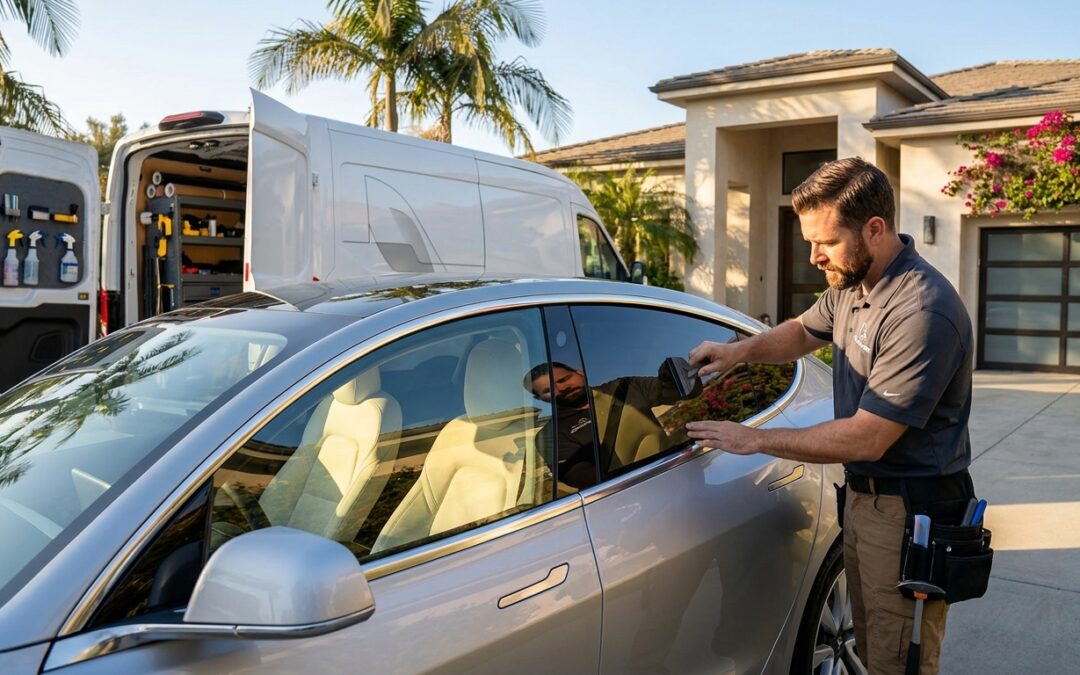
Sitting in Los Angeles traffic or spending hours waiting in an auto shop lobby is inconvenient. Legacy Mobile Tints offers a flexible solution by bringing our complete installation setup directly to your home or office driveway.
Our technicians serve vehicle owners in Pasadena, Glendale, Burbank, Arcadia, Alhambra, Monterey Park, Montebello, South Pasadena, and San Marino. We arrive fully equipped to perform clean, precise tint installations without disrupting your workday or weekend schedule. Whether you need service for a daily commuter car, an SUV, or a luxury sedan, our team delivers professional results where you are.
Request Your Free Mobile Tinting Quote
Choosing the right VLT percentage depends on your personal preferences for shade, heat reduction, and compliance with California window tint laws. Whether you prefer a light 50% ceramic film for glare reduction or a 5% carbon film for maximum privacy, Legacy Mobile Tints delivers expert installation right to your door.
If you need mobile car tinting in Burbank or anywhere in the surrounding Los Angeles area, contact Legacy Mobile Tints today. Call us at 818-605-5855 or visit our contact page to request a free quote and schedule your mobile tinting appointment.