What Are The Different Types Of Car Window Tint?
When you decide to tint your vehicle’s windows, you quickly realize that not all tint films are created equal. Choosing the right film affects how your car looks, how much heat enters your cabin, and how well your tint lasts under the Southern California sun. Whether you drive in Pasadena, Glendale, Burbank, Arcadia, or surrounding Los Angeles communities, understanding film materials helps you make the right choice for your vehicle and budget.
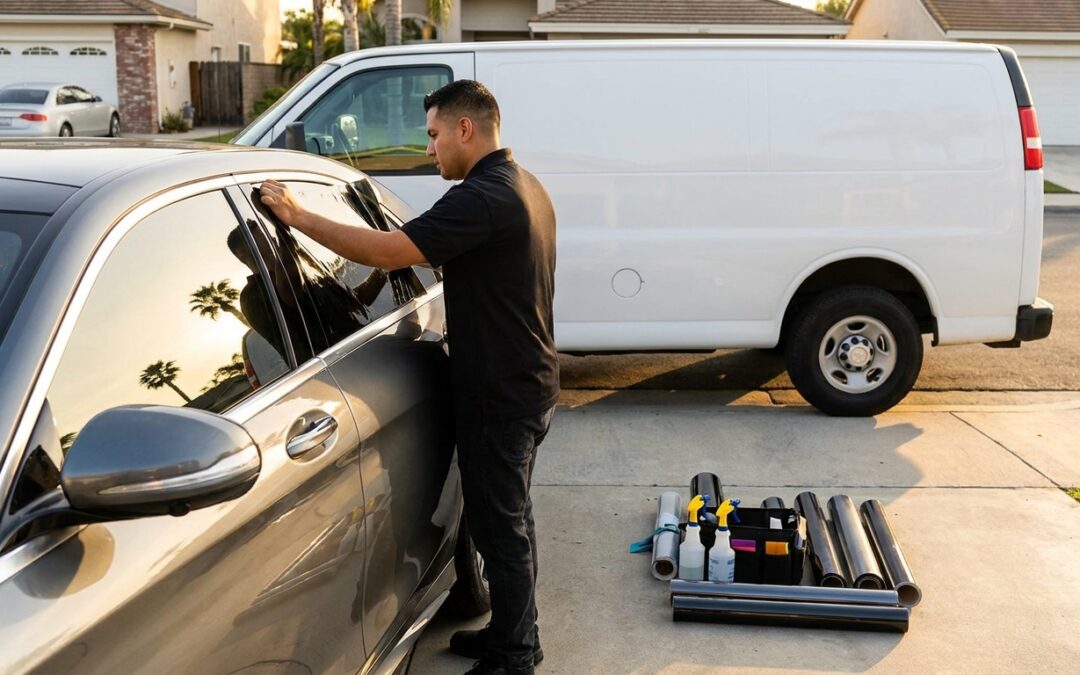
Legacy Mobile Tints provides professional mobile installation directly to your home or office. We bring high-quality carbon and ceramic tint options straight to you, removing the hassle of waiting at a shop. Here is a clear breakdown of the different types of car window tint available today, how they perform, and which option best fits your driving needs.
Main Types of Automotive Window Tint Film
Window tint films vary in composition, appearance, durability, and heat rejection performance. Here are the primary types used in the automotive industry.
1. Dyed Window Tint
Dyed window tint is an entry-level film created by placing a layer of dye between an adhesive layer and a protective top coat. It absorbs solar heat and offers privacy by darkening your windows. While dyed film is budget-friendly and reduces glare, it degrades faster than other materials. Over time, exposure to intense sun causes dyed film to fade or turn purple, and its heat reduction capabilities are minimal compared to higher-end materials.
2. Metalized Window Tint
Metalized tint uses microscopic metallic particles embedded within the film layers. These metal particles reflect heat and UV radiation away from your car rather than absorbing it. Metalized film is durable, strengthens the glass against shattering, and provides solid heat control. However, its metallic content gives windows a shiny, reflective appearance that some drivers dislike. More importantly, metal particles can interfere with modern electronic signals, including GPS navigation, radio reception, and cellular service.
3. Carbon Window Tint
Carbon film contains carbon particles that absorb infrared heat without using metal components. It produces a rich, dark matte finish that improves your vehicle’s appearance without adding reflectivity. Carbon tint does not fade over time, and because it contains no metal, it will never interfere with radio or cell signals.
Carbon tint blocks significant amounts of heat and UV rays, making it a reliable, long-lasting step up from dyed films. If you want strong protection and stylish aesthetics at a balanced price point, review our tint options to see how carbon film fits your car.
4. Ceramic Window Tint
Ceramic tint represents the highest tier of window film technology. It utilizes non-conductive ceramic micro-particles that block light, heat, and ultraviolet radiation with exceptional efficiency. Ceramic film rejects up to 99 percent of harmful UV rays and blocks a massive percentage of solar heat, keeping your interior significantly cooler during hot Los Angeles summers.
Because ceramic film contains zero metal, it allows 100 percent of satellite, phone, and radio signals to pass through freely. It also offers maximum clarity, reducing glare while maintaining excellent nighttime visibility. While ceramic tint costs more upfront, its comfort benefits and durability make it the most effective investment for daily drivers.
Carbon vs. Ceramic Tint: Which Should You Choose?
At Legacy Mobile Tints, we focus on carbon and ceramic films because they deliver the reliability, heat rejection, and clear optics our Southern California customers expect. Choosing between them depends on your daily commute and budget.
Choose carbon tint if you want a clean matte appearance, reliable UV protection, and good heat reduction without paying top-tier pricing. Carbon tint is a durable upgrade over basic dyed film and will maintain its dark tone for years.
Choose ceramic tint if high temperatures and cabin heat are your main concerns. Ceramic film offers superior heat block, keeping your leather seats cool and reducing your reliance on air conditioning. If you spend significant time driving through traffic in Pasadena, Glendale, or Burbank, ceramic tint provides maximum thermal comfort.
Understanding Tint Shades: From 50% to 5% VLT
Window tint darkness is measured by Visual Light Transmission (VLT). The VLT percentage represents the amount of light allowed through the window film. A lower percentage means a darker tint.
- 50% VLT: A light shade that offers subtle heat reduction and UV protection while keeping the interior visible. Ideal for drivers who want protection without a dark appearance.
- 35% to 20% VLT: Medium to dark shades that offer strong privacy, significant glare reduction, and a sleek aesthetic.
- 5% VLT: Often called limo tint, this is the darkest shade available. It allows only 5 percent of light through, providing complete privacy for rear cabin areas.
We offer shades ranging from 50% down to 5% in both carbon and ceramic lines, allowing you to customize the look and privacy level of your vehicle.
California Car Window Tint Laws
Before choosing your tint shade, it is important to understand local regulations. California automotive tint laws set strict standards for window darkness to ensure clear driver visibility and officer safety.
Here are the main requirements for passenger vehicles in California:
- Windshield: You may apply a tint strip to the top four inches of the windshield. Full windshield tinting is not permitted, though clear protective UV films are allowed under specific circumstances.
- Front Side Windows: The front driver and passenger side windows must allow at least 70 percent of visible light through when combined with the factory glass tint.
- Back Side Windows: Any level of darkness is allowed on the rear side windows, provided the vehicle has dual side mirrors.
- Rear Window: Any darkness level is permitted on the rear window if the vehicle features side mirrors on both sides.
Our technicians guide you toward legal film combinations so your vehicle looks great while keeping you compliant with state driving regulations.
Why Choose Mobile Window Tinting in Los Angeles?
Taking your car to a physical tint shop often means dropping off your vehicle for several hours or waiting in an uncomfortable lobby. Legacy Mobile Tints solves this inconvenience by bringing shop-quality installation directly to your doorstep.
Whether you are at home or working at your office, our equipped team handles the entire installation on-site across the Los Angeles area. We serve clients in Pasadena, Glendale, Burbank, Arcadia, Alhambra, Monterey Park, Montebello, South Pasadena, and San Marino.
If you want to see examples of our finished installations on various vehicle makes and models, explore our work. We also offer dedicated local services, including mobile car tinting in Pasadena and surrounding areas.
Request Your Mobile Tinting Quote Today
Protect your car’s interior, cut down cabin heat, and upgrade your vehicle’s style without taking time out of your busy schedule. Legacy Mobile Tints delivers premium carbon and ceramic window tinting straight to your home or workplace.
Ready to schedule your mobile installation or have questions about shade options? Call us directly at 818-605-5855 or visit our contact page to request a fast mobile tint quote today.