Is There A New Law For Tinted Windows In California?
California drivers frequently ask whether state window tint regulations have changed recently. Social media posts and online forums often spread conflicting information about new tint limits, potential enforcement updates, and legal shade percentages. If you live in the Greater Los Angeles area and want to keep your vehicle cool while staying compliant with state rules, it helps to understand what current California window tint laws actually state.
The short answer is that California has not replaced its core tint framework with a completely new set of darkness rules. However, enforcement remains strict, and drivers must understand the distinction between front, rear, and windshield glass regulations under California Vehicle Code Section 26708. Here is a clear breakdown of the current laws, how visible light transmission works, and how to choose the right film for your car.
Current California Window Tint Law Regulations
California regulates window film based on Visible Light Transmission, commonly referred to as VLT. VLT represents the percentage of visible light allowed to pass through both the window film and the factory glass combined. Understanding these percentages is essential before applying film to any vehicle.
Windshield Tint Rules
Under California law, you cannot place standard dark tint across the entire front windshield. The law permits a transparent sunstrip along the top four inches of the windshield, often referred to as the AS-1 line. This strip helps reduce glare from the sun without blocking driver visibility. Transparent, non-colored film that blocks ultraviolet radiation is permitted on the windshield only under specific medical exemptions certified by a licensed physician.
Front Side Window Tint Requirements
The front side windows, which include the driver side and front passenger side windows, have strict light transmission requirements. California law mandates that these windows allow at least 70 percent of visible light to pass through. Because factory glass often comes with a subtle built-in tint from the manufacturer, adding even a standard 50 percent or 35 percent film can drop the total VLT below the legal 70 percent threshold. If you choose to tint front windows, you must select high-transmission films designed to comply with state standards.
Rear Side Windows and Back Window Limits
Unlike front side windows, California gives drivers complete freedom regarding the rear side windows and the back window glass. You can legally install any shade darkness on these rear surfaces, ranging from 50 percent down to 5 percent dark tint, as long as the vehicle features dual side mirrors capable of providing a view extending at least 200 feet to the rear.
Debunking Myths About New Window Tint Laws
Rumors about new window tint laws circulate regularly. Some claims suggest that California made all dark window film illegal, while others suggest the state raised the front window tint limit. Neither claim is accurate.
Did California Change the VLT Percentage?
The core VLT requirement for front side windows remains fixed at 70 percent total light transmission. While regulatory agencies refine enforcement guidelines from time to time, the fundamental law governing window film light passing capabilities has not shifted to permit dark front window films.
Medical Exemptions and Legal Requirements
California allows medical exemptions for individuals with documented health conditions that require protection from direct sunlight, such as lupus or severe light sensitivity. To qualify legally, a driver must carry a written note signed by a licensed physician or dermatologist explaining the specific medical need. The documentation must stay in the vehicle at all times and be presented upon request during a traffic stop.
Choosing Legal Tint Options: Carbon vs. Ceramic
Many drivers seek window tint primarily to reduce internal heat and protect leather seats from heat damage. Achieving effective heat rejection does not require breaking the law with dark front window shades. Modern window film technology allows for thermal control regardless of color intensity.
When reviewing tint options, you will generally choose between carbon and ceramic films:
- Carbon Window Film: Contains carbon particles that absorb heat and reduce glare. It features a matte finish that will not fade or turn purple over time, offering reliable solar protection across shades from 50 percent down to 5 percent.
- Ceramic Window Film: Uses non-conductive ceramic nanoparticles to reject infrared light and heat. Premium ceramic film allows high visible light transmission while blocking up to 99 percent of ultraviolet rays and a significant portion of infrared heat. This allows drivers to stay legal on front windows with lighter films while still enjoying interior cooling.
Why Professional Mobile Tinting Matters
Proper installation plays an important role in meeting state window standards. Poorly installed film can form bubbles, peel along edges, or obscure visual clarity, creating visual obstructions that attract law enforcement attention.
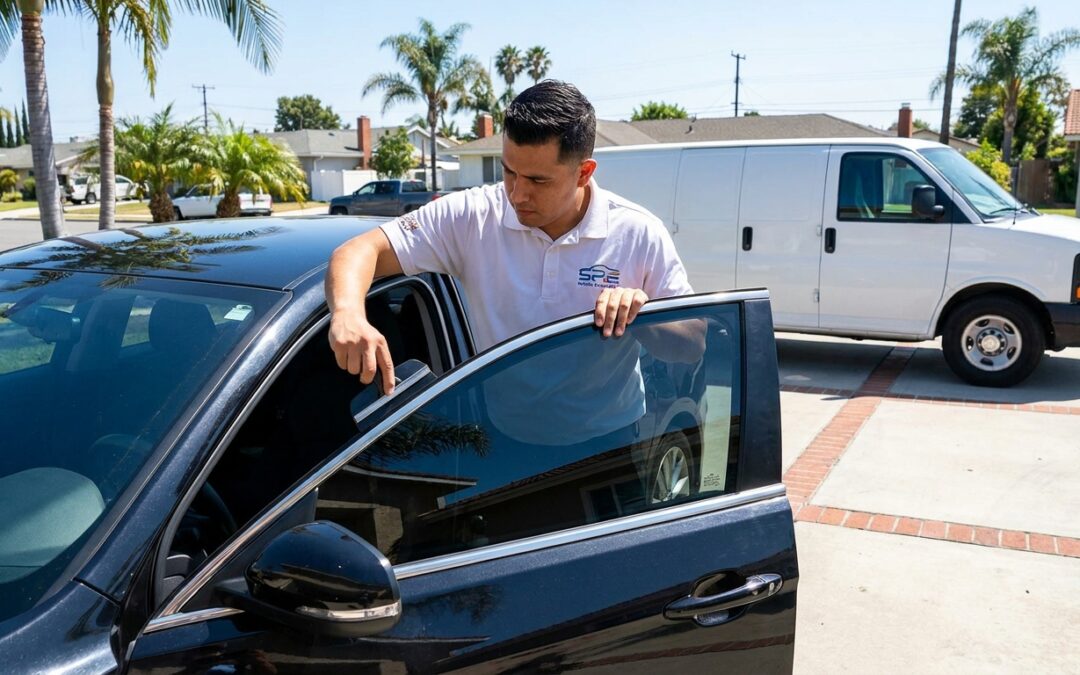
Legacy Mobile Tints brings professional installation directly to your doorstep. Instead of spending hours waiting at a shop, experienced installers treat your vehicle at your home or office. Take a look at our work to see precise window film applications on various vehicle models.
Mobile service covers multiple communities throughout the Los Angeles region, including:
- Pasadena
- Glendale
- Burbank
- Arcadia
- Alhambra
- Monterey Park
- Montebello
- South Pasadena
- San Marino
If you need service in specific locations like mobile car tinting in Pasadena, having professional technicians come to your location saves time while ensuring your window film complies with proper legal application standards.
Frequently Asked Questions About California Window Tinting
Can police pull you over just for tinted windows in California?
Yes. In California, non-compliant window tint on front side windows or the windshield can serve as primary cause for a traffic stop. Law enforcement officers use specialized light meters to measure visible light transmission directly through the glass.
What is the darkest legal tint in California?
For rear side windows and the back window, there is no minimum light percentage requirement; 5 percent VLT film is legal provided you have functional left and right exterior mirrors. For front side windows, the darkest legal combination of film and factory glass must allow at least 70 percent of light through.
Does ceramic tint block heat better than carbon tint?
Yes. While both films block ultraviolet radiation effectively, ceramic film incorporates advanced ceramic nanoparticles engineered to block infrared radiation, which causes solar heat buildup inside the vehicle.
Request Your Mobile Tinting Quote Today
Stay comfortable on California roads while keeping your vehicle compliant with state regulations. Legacy Mobile Tints offers carbon and ceramic window film installations delivered directly to your home or workspace in Los Angeles County. Whether you prefer a lighter shade for front window compliance or darker privacy film for rear windows, our team delivers quality results without disrupting your daily schedule.
Ready to improve your vehicle window protection? Visit our contact page or call 818-605-5855 today to request a free mobile tint quote.