
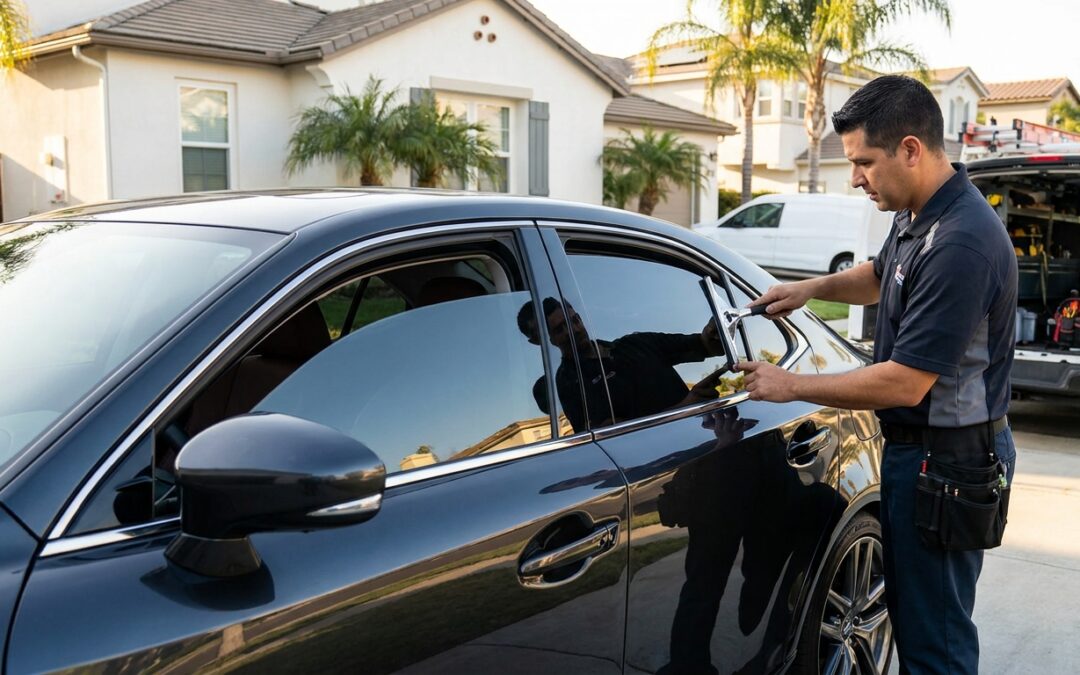
Is 20% Window Tint Legal In California?
If you live in Southern California, window tint is almost essential. The sun shines brightly throughout the year, raising vehicle cabin temperatures and exposing interior materials to intense ultraviolet rays. When shopping for window film, many car owners consider a 20% visible light transmission (VLT) tint. A 20% shade provides excellent glare reduction, enhanced privacy, and a stylish look for almost any vehicle.
Before installing new film, you need to know the local regulations. Is 20% window tint legal in California? The short answer is yes and no, depending on which windows on the vehicle you plan to cover. California window tint laws treat front side windows, windshields, and rear windows differently. Understanding these rules helps you keep your car legal while enjoying the benefits of custom window film.
Understanding California Window Tint Laws and VLT
To understand California window tint regulations, it helps to understand how film darkness is measured. Window tint shade is rated by Visible Light Transmission percentage, commonly called VLT. VLT measures the amount of natural light that can pass through the vehicle glass and film combined.
A higher VLT percentage means the tint is lighter, letting more visible light pass through. A lower VLT percentage indicates a darker film. For instance, a 50% tint allows half of the ambient light to enter, while a 5% tint, often called limo tint, blocks 95% of incoming light. A 20% tint allows only 20% of visible light through, making it a distinctly dark shade.
Front Side Window Restrictions
Under California Vehicle Code section 26708, front side windows have strict rules. The law requires that any aftermarket film applied to the driver-side and front passenger-side windows must allow at least 70% of light to pass through. This means that when the film is installed on factory glass, the combined total VLT must equal 70% or higher.
Because 20% tint allows only 20% VLT, applying a 20% tint to your front driver or front passenger side windows is not legal under California law. Front side windows must remain relatively clear so law enforcement officers and other drivers can maintain clear eye contact with you when on the road.
Windshield Tint Regulations
California regulations for front windshields are equally precise. You cannot apply dark tint across the entire windshield. The law permits a strip of transparent, non-reflective window film on the top four inches of the windshield. This top section, often called an eyebrow strip or visor strip, helps block blinding overhead sun without restricting the driver’s main line of sight. Placing a 20% film across the entire front windshield is strictly prohibited.
Where Is 20% Window Tint Legal in California?
While 20% film cannot be placed on front side windows or full windshields, you can legally use it on other parts of your vehicle. California law allows significantly darker shades on rear glass as long as specific conditions are met.
Rear Side Windows and Rear Windshield
California permits any darkness level on the rear side windows and the back windshield, provided the vehicle is equipped with dual side-view mirrors. As long as your car, truck, or SUV has functional mirrors on both the driver and passenger sides, you can legally install 20%, 15%, or even 5% VLT film on:
- Rear passenger side windows
- Rear quarter glass panels
- Back window glass
This rule applies equally to sedans, coupes, SUVs, trucks, and vans. If you want maximum shade and privacy for backseat passengers or personal cargo, installing a 20% shade on all rear glass panels is completely legal throughout California.
Why Drivers Choose 20% Tint for Rear Windows
A 20% tint is one of the most balanced options available for rear glass. It is dark enough to obscure items in your back seat from casual onlookers, helping deter potential theft. At the same time, it provides useful privacy for rear passengers while reducing harsh glare from trailing headlights at night. Exploring various tint options lets you combine lighter legal shades on front windows with darker shades on the rear for a balanced setup.
What Happens If You Put 20% Tint on Front Windows?
If you choose to install 20% tint on your front side windows, you run the risk of receiving an equipment violation from law enforcement. In California, non-compliant window film is typically handled as a fix-it ticket.
When issued a citation for dark front windows, you are required to correct the issue. This involves removing the non-compliant film from the front glass and having an authorized official sign off on the correction. Continuing to drive with overly dark front tint can result in repeated stops and additional fees.
For front windows, many vehicle owners opt for lighter films, such as a 50% or 70% high-performance film. Premium films offer strong heat rejection and complete ultraviolet protection without violating state VLT thresholds.
Carbon vs. Ceramic Window Tint Performance
Choosing the right film material is just as important as selecting the correct VLT percentage. Modern automotive window films are engineered to block heat and damaging radiation regardless of how light or dark they appear.
Carbon Window Film
Carbon film uses carbon particles embedded within the material. It delivers a rich matte finish that does not fade or turn purple over time. Carbon film effectively blocks ultraviolet rays and rejects a significant amount of infrared solar heat, keeping your vehicle interior comfortable.
Ceramic Window Film
Ceramic film is the top tier of automotive window protection. It contains non-conductive ceramic nanoparticles that target solar heat directly. Ceramic window tint blocks up to 99% of harmful UV rays and rejects a massive portion of infrared heat. Because ceramic technology does not rely strictly on dark dye to reject heat, even a light ceramic tint on your front windows can block heat effectively while remaining fully legal. You can view real customer vehicles on our work page to compare visual finishes.
Mobile Window Tinting Services in Los Angeles
Installing quality window tint requires professional skill, a clean environment, and precise handling. Legacy Mobile Tints brings high-grade window film installation directly to your home or office. Instead of spending hours sitting in a shop waiting room, our mobile service units deliver complete professional installation at your location.
We serve vehicle owners throughout the Greater Los Angeles area, providing dedicated mobile service in:
- Pasadena
- Glendale
- Burbank
- Arcadia
- Alhambra
- Monterey Park
- Montebello
- South Pasadena
- San Marino
Whether you need professional mobile car tinting in Pasadena or on-site service in surrounding cities, our technicians arrive equipped with premium carbon and ceramic films ranging from 50% down to 5% shades. We make sure every installation looks clean, fits precisely, and complies with California window tint laws.
Request Your Free Mobile Tint Quote Today
Upgrade your ride with high-performance carbon or ceramic window film installed right at your driveway or workspace. Contact Legacy Mobile Tints today at 818-605-5855 or visit our contact page to get a customized quote for your vehicle.