
How Much Does It Cost To Tint Car Windows?
Driving in Greater Los Angeles without window tint often leads to uncomfortable drives, strong sun glare, and high interior heat. Whether you commute along the I-210 or park under the direct sun in the San Gabriel Valley, high-quality window film makes a noticeable difference. One of the most common questions car owners ask before upgrading their vehicle is: how much does it cost to tint car windows?
On average, tinting a complete vehicle in Southern California ranges from $200 to $800 or more. The final price depends on the size of your vehicle, the type of film you choose, whether old film needs removal, and the quality of the installation service. This guide covers everything you need to know about pricing, film options, legal limits, and mobile installation services.
Average Cost to Tint Car Windows in Los Angeles
Window tinting prices vary based on the specific layout and glass surface area of your automobile. Smaller vehicles require less material and labor, while larger trucks and SUVs require more time and film.
Here is a standard price breakdown by vehicle category:
- Two-Door Coupes: $200 to $450
- Four-Door Sedans: $250 to $550
- SUVs and Crossovers: $300 to $650
- Trucks (Single to Crew Cab): $200 to $500
- Windshield Tinting (Full): $150 to $300
Basic dyed or standard tint sits at the lower end of these price ranges. Higher-tier materials, such as carbon and ceramic films, cost more up front but offer far better heat rejection and durability.
Key Factors That Influence Window Tinting Prices
No two vehicles or installation requirements are identical. Several factors explain why prices differ from one quote to another.
Type of Window Film Selected
The material technology behind the film is the main driver of overall cost. Entry-level dyed films are cheaper, but they tend to fade or turn purple over time. Advanced films use higher-grade materials designed for long-term performance.
You can review different tint options to decide which material best fits your driving habits and budget. Standard choices include:
- Carbon Film: Contains carbon particles that block infrared light effectively. Carbon film features a matte finish, never fades to purple, and does not interfere with cellular or GPS signals. It is a reliable mid-tier choice.
- Ceramic Film: Uses non-conductive ceramic particles to deliver maximum heat rejection and UV protection. It blocks the highest percentage of solar heat, keeping your interior significantly cooler during warm California summers.
Vehicle Size and Glass Complexity
Vehicles with large side windows, complex rear windshield curves, or extra quarter-glass panels take more time to cut and apply. A sports car with a steep rear glass curve requires extra heat-shrinking work compared to a straightforward truck back window.
Removal of Existing Tint
If your car currently has old, bubbling, or peeling window tint, that material must be removed before applying new film. Old film removal requires specialized steamers, blades, and adhesive removers. Expect film removal services to add $100 to $200 to your total job cost depending on the condition of the glass.
Mobile Service Convenience
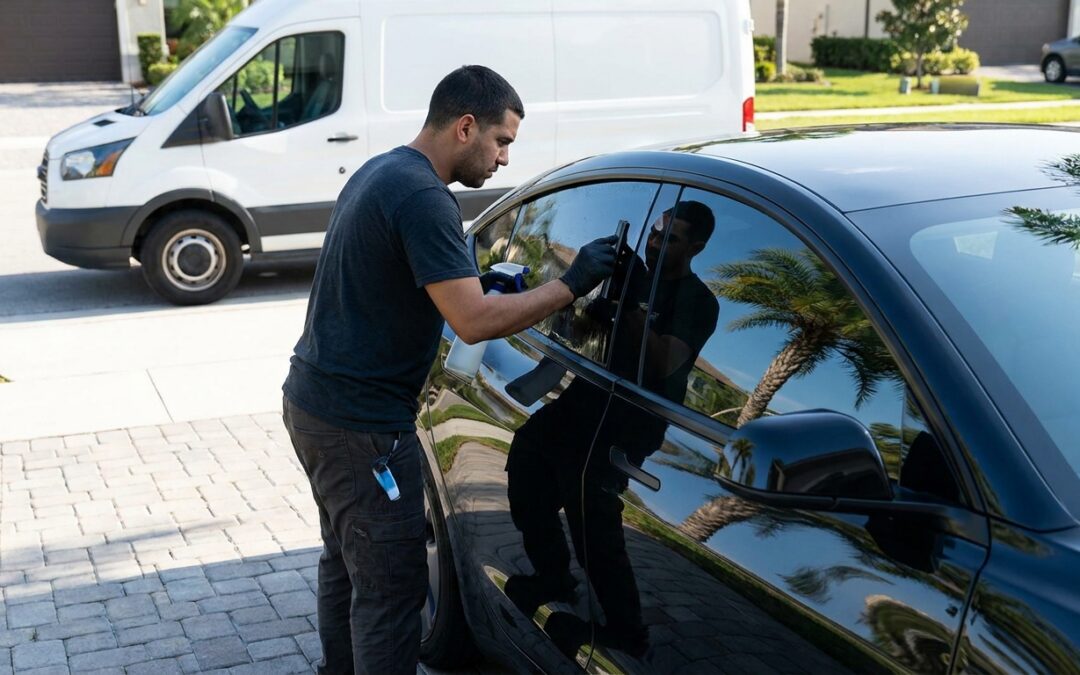
Traditional tint shops require you to drop your vehicle off, arrange a ride home, or wait in a small waiting room for several hours. Mobile tinting brings professional installation directly to your home or workplace. While some mobile services charge heavy travel fees, professional outfits include service across their primary coverage zones seamlessly.
Legacy Mobile Tints offers on-site installation across the Los Angeles area, including Pasadena, Glendale, Burbank, Arcadia, Alhambra, Monterey Park, Montebello, South Pasadena, and San Marino. If you live or work in the area, scheduling mobile car tinting in Pasadena or nearby cities allows you to keep working or relaxing while your vehicle gets serviced on-site.
Understanding California Window Tint Laws
When selecting window shades, local legal regulations matter. California law sets clear guidelines regarding how dark your vehicle’s window tint can be.
- Windshield: You may apply a transparent strip across the top four inches of the windshield. Full windshields cannot have dark tint, though clear ceramic heat-rejection films are popular choices for front glass.
- Front Side Windows: Must allow at least 70% of light through when combined with the factory glass tint (70% Visible Light Transmission / VLT).
- Back Side Windows: Any darkness level is allowed legally.
- Rear Windshield: Any darkness level is allowed legally, provided the vehicle has functional side mirrors on both sides.
Shades are measured by percentage of visible light transmission (VLT). A lower percentage means a darker shade. For instance, a 5% shade (limo tint) lets in 5% of light, while a 50% shade lets in half of incoming light. Professional installers help you pick a shade range from 50% down to 5% that meets your comfort needs and aligns with state regulations.
Carbon vs. Ceramic Tint: Which Is Worth Your Investment?
Because window film installation is a long-term investment in your vehicle, choosing the right material prevents early replacement costs.
Carbon Window Tint
Carbon tint offers solid performance for drivers looking for clean aesthetics and solid heat reduction without paying top-tier prices. Key characteristics include:
- Strong rejection of infrared heat
- True black matte appearance that preserves vehicle styling
- Zero signal interference with mobile phones, satellite radio, or tire pressure monitors
- Long lifespan with resistance to fading or color change
Ceramic Window Tint
Ceramic tint is the premium standard for automotive glass. It uses advanced ceramic nano-particles to target heat causing solar rays. Characteristics include:
- Maximum rejection of solar heat and infrared radiation
- Up to 99% ultraviolet (UV) ray rejection, protecting your skin and preventing interior dashboard cracking
- High clarity day and night, even with darker shades
- No metal components, keeping all electronic signals clear
While ceramic tint carries a higher initial price tag, the noticeable temperature drop inside your car reduces air conditioning reliance and enhances driving comfort, making it a popular option in Southern California.
Why Mobile Tinting Saves Time and Money
Time is valuable. Driving to a shop, spending time in traffic, and sitting in a waiting room wastes hours of your day. Mobile window tinting eliminates that hassle completely.
A professional technician arrives with a mobile setup equipped with precision-cut tools and clean installation gear. As long as you have a shaded spot, garage, or suitable flat parking area at your house or office, the entire tinting process takes place right where you are. You can check out our work to see examples of completed installations on various vehicle makes and models.
Request Your Free Mobile Tint Quote Today
Knowing how much it costs to tint car windows allows you to make an informed decision based on your budget, vehicle type, and performance needs. Legacy Mobile Tints delivers professional carbon and ceramic window tint installations directly to your doorstep across Pasadena, Glendale, Burbank, Arcadia, Alhambra, Monterey Park, Montebello, South Pasadena, and San Marino.
Ready to upgrade your vehicle’s privacy, comfort, and appearance? Call us directly at 818-605-5855 or visit our website to contact Legacy Mobile Tints for a free, upfront mobile tint quote today.