
How Long Will Tint Last On A Car?
Installing window tint on your vehicle is one of the most effective ways to reduce interior heat, block harmful UV rays, and increase privacy. However, window film does not last forever. If you are planning to tint your vehicle or are curious about the condition of your current film, you likely want to know: how long will tint last on a car?
The answer depends on several key factors, including the type of material used, the quality of installation, local climate conditions, and how well you maintain the glass. On average, standard dyed tint lasts between one and three years, while premium options like carbon and ceramic window film can last ten years or even the life of the vehicle.
For drivers in Southern California areas like Pasadena, Glendale, Burbank, Arcadia, Alhambra, Monterey Park, Montebello, South Pasadena, and San Marino, constant sunlight accelerates film wear. Understanding film lifespan helps you choose the right material and protect your investment over time.
Average Lifespan by Window Tint Material
The material used to manufacture window film is the single biggest factor determining its durability. Modern automotive window films range from basic entry-level options to advanced solar control technologies.
Dyed Window Film: 1 to 3 Years
Dyed film is a basic, budget-friendly tint option. It uses layers of dye to absorb solar heat and darken the glass. Over time, sunlight breaks down these dyes, causing the film to fade or turn a purple shade. In warm, sunny regions, dyed film often shows signs of deterioration within one to two years.
Metallic Window Film: 3 to 5 Years
Metallic tint incorporates microscopic metal particles that reflect solar heat away from the vehicle interior. This metallic structure makes it more durable than dyed film. However, metallic tint has a noticeable drawback: the metal particles can block radio, GPS, and cellular signals. Because of this issue, many vehicle owners choose non-metallic modern alternatives.
Carbon Window Tint: 5 to 10 Years
Carbon film contains carbon particles that absorb infrared light effectively. Carbon tint features a dark matte finish that will not fade or turn purple over time. It offers reliable heat rejection without interfering with mobile devices, cell signals, or radio waves. Expect high-quality carbon tint to last anywhere from five to ten years under normal driving conditions.
Ceramic Window Tint: 10+ Years to Lifetime
Ceramic film represents the highest standard in automotive window tinting. Made with non-conductive ceramic nanoparticles, it provides superior heat reflection and blocks up to 99 percent of UV rays. Ceramic film is exceptionally resistant to fading, bubbling, and peeling. When installed professionally, ceramic tint frequently lasts for the lifetime of the vehicle. You can explore different tint options to see how carbon and ceramic materials compare in performance and solar protection.
Factors That Determine How Long Car Tint Lasts
While the film material sets a baseline lifespan, real-world conditions dictate exactly how long your tint remains clear and functional.
Sunlight and Climate Exposure
Intense sunlight is the primary cause of window tint breakdown. Solar heat and ultraviolet radiation continuously stress the adhesives and tint pigments. Vehicles parked outdoors in direct sun every day experience faster degradation than cars kept in garages or covered driveways.
Quality of Installation
Proper glass preparation is essential for long-term durability. Dust, grease, or leftover moisture trapped beneath the film creates air pockets and causes peeling along the glass edges. Professional installation ensures thorough surface preparation, exact edge trimming, and a tight bond that holds up over time.
Cleaning Products and Maintenance Habits
Using improper cleaning products can damage window film rapidly. Cleaners containing ammonia break down the protective topcoat and adhesive layer, leading to cloudiness and premature peeling. Cleaning tinted glass with abrasive pads or paper towels can also leave micro-scratches across the interior surface.
Signs Your Vehicle Tint Needs to Be Replaced
Recognizing when window film has failed ensures you replace it before visibility or driving safety is compromised. Look for these common warning signs:
- Purple Discoloration: Indicates that the dyes inside the film have broken down from long-term UV exposure.
- Bubbling and Blistering: Occurs when the adhesive deteriorates and loses its grip on the glass surface.
- Peeling Along the Edges: Signals that dirt or moisture has worked its way beneath the film border.
- Hazy or Blurry Appearance: Shows that the clear coat layer of the film is failing, which creates glare and reduces visibility at night.
If you notice any of these issues on your vehicle, you can inspect professional film work on our work page to see how a fresh, clean installation should look.
California Window Tint Laws and Film Selection
When selecting film shades, remaining compliant with state law is essential so you do not have to remove film prematurely. California window tint regulations specify rules regarding visible light transmission for different windows on a passenger car:
- Windshield: A non-reflective tint strip is permitted only on the top four inches of the windshield.
- Front Side Windows: Must allow at least 70 percent of light through (70% VLT) when combined with factory glass tint.
- Rear Side Windows: Any darkness percentage is allowed, ranging from 50 percent down to 5 percent.
- Rear Window: Any darkness percentage is allowed as long as the vehicle is equipped with dual side mirrors.
Choosing high-grade ceramic or carbon materials lets you maximize heat reduction and UV blocking while staying fully compliant with state regulations on front windows. Whether you need Pasadena mobile car tinting or service in neighboring cities, choosing legal shade combinations keeps your vehicle looking great without legal issues.
How to Extend the Life of Your Window Tint
Taking simple maintenance steps after installation ensures your window film looks great and performs well for many years:
- Allow Full Curing Time: Wait three to five days before rolling down your windows after installation so the adhesive cures completely.
- Use Ammonia-Free Glass Cleaners: Always clean tinted glass with ammonia-free spray or mild soap mixed with water.
- Clean with Microfiber Towels: Wipe down windows using clean, soft microfiber towels instead of paper towels.
- Watch Seat Belt Buckles: Unbuckle carefully to prevent metal buckles from snapping against the glass and scratching the film.
Request a Mobile Tint Quote Today
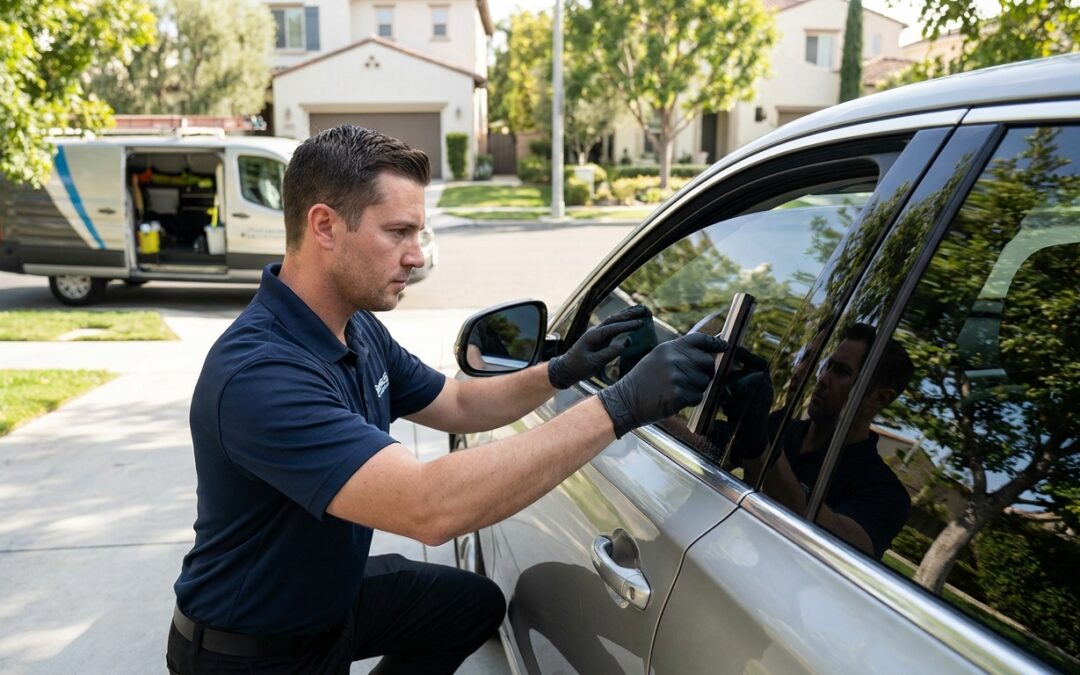
Legacy Mobile Tints delivers professional automotive window tinting straight to your home or workplace. Serving Pasadena, Glendale, Burbank, Arcadia, Alhambra, Monterey Park, Montebello, South Pasadena, and San Marino, our technicians install high-performance carbon and ceramic window films right on site. We offer shades ranging from 50% to 5% VLT to match your style and privacy preferences.
To protect your vehicle interior from sun damage, reduce heat, and enjoy long-lasting quality, contact us today or call 818-605-5855 to request your mobile window tint quote.