
How Bad Is 20% Tint At Night? A Practical Driver Safety Guide
Choosing the right window tint shade requires balancing daytime comfort, privacy, heat rejection, and nighttime safety. A frequent choice among vehicle owners is 20 percent visible light transmission tint. But a critical question remains before installation: how bad is 20% tint at night?
A 20% tint shade blocks 80% of incoming light, permitting only 20% to pass through the glass. While this level of darkness offers strong daytime privacy and solar protection, operating a vehicle in low-light conditions demands careful consideration. Here is a practical breakdown of how 20% tint performs after dark, how film quality affects your vision, and what California window tint regulations mean for your vehicle.
What Driving at Night Looks Like with 20% Tint
When you drive after dark, a 20% tint noticeably reduces the amount of ambient light entering the vehicle cabin. How significantly this impacts your vision depends on your driving environment.
On well-lit city streets, driving with 20% tint on rear windows is generally straightforward. Overhead streetlights, storefront illumination, and headlights from other vehicles provide adequate lighting to keep surrounding objects clear.
However, on unlit side streets, rural highways, or dark parking structures, 20% tint can reduce peripheral visibility. Reversing out of an unlit driveway or turning onto an unlit street often requires extra caution. Drivers frequently need to rely more heavily on backup cameras, modern side mirrors, or even roll down front side windows when navigating tight spaces in dark areas.
Key Factors Affecting Nighttime Visibility
Not every 20% tint installation delivers the same visual experience at night. Several distinct factors influence how clearly you can see through your vehicle glass in low-light settings.
1. Film Material Quality: Carbon vs. Ceramic Tint
The core technology of the window film plays a major role in visual clarity. Standard dye-based films can create internal haze or blur, making night vision noticeably harder. Premium options, such as those detailed in our carbon and ceramic tint options, deliver superior optical clarity.
Ceramic window film uses non-metallic, nano-ceramic particles. It targets high levels of infrared heat and ultraviolet radiation while maintaining clear glass performance from the inside looking out. Even in a 20% shade, professional ceramic film produces a crisp view without cloudy visual distortion.
2. Front Window vs. Rear Window Installation
Where the film is installed on the vehicle drastically alters your safety and driving experience. Installing a 20% shade on rear side windows and the back windshield reduces blinding headlight glare from trailing traffic, making nighttime driving easier on your eyes. Conversely, putting a 20% shade on driver and passenger front side windows significantly limits your ability to view side mirrors and spot pedestrians during turns.
3. Vehicle Headlight Strength
Modern cars equipped with factory LED or HID headlights illuminate dark roads effectively, helping offset dark window shades. Vehicles with older halogen bulbs provide lower light output, making it harder to spot obstacles through dark side glass.
California Window Tint Laws and 20% Shades
Before selecting a shade level, drivers should understand local legal requirements. California tint laws set clear standards for window darkness:
- Windshield: Only a non-reflective tint strip on the top 4 inches of the windshield is allowed.
- Front Side Windows: Must allow at least 70% visible light transmission (VLT) when combined with factory glass.
- Rear Side Windows: Any dark shade (including 20% or 5%) is legal on passenger cars, trucks, and SUVs, provided the vehicle has dual exterior side mirrors.
- Rear Windshield: Any level of darkness is allowed as long as dual side mirrors are present.
Installing 20% tint on front side windows does not comply with California state regulations. However, applying 20% tint to rear side windows and the back glass is fully legal and remains a popular option for solar protection and privacy.
Comparing 20% Tint to Alternative Shades
Evaluating 20% tint against other standard percentages helps determine if it fits your everyday driving needs:
- 50% Tint: A light shade that offers solid UV protection and mild glare reduction without altering night vision.
- 35% Tint: A medium shade providing a clean appearance and noticeable heat reduction while keeping nighttime visibility high.
- 20% Tint: A dark shade providing high privacy and strong daytime heat rejection. Nighttime visibility is suitable for rear glass but restricted on front side glass.
- 5% Tint: Commonly referred to as limo tint. It blocks nearly all light, making night vision difficult without bright ambient street lighting.
To view examples of these tint levels installed on customer vehicles, browse our work gallery for real-world comparisons.
Mobile Window Tinting Across the Los Angeles Area
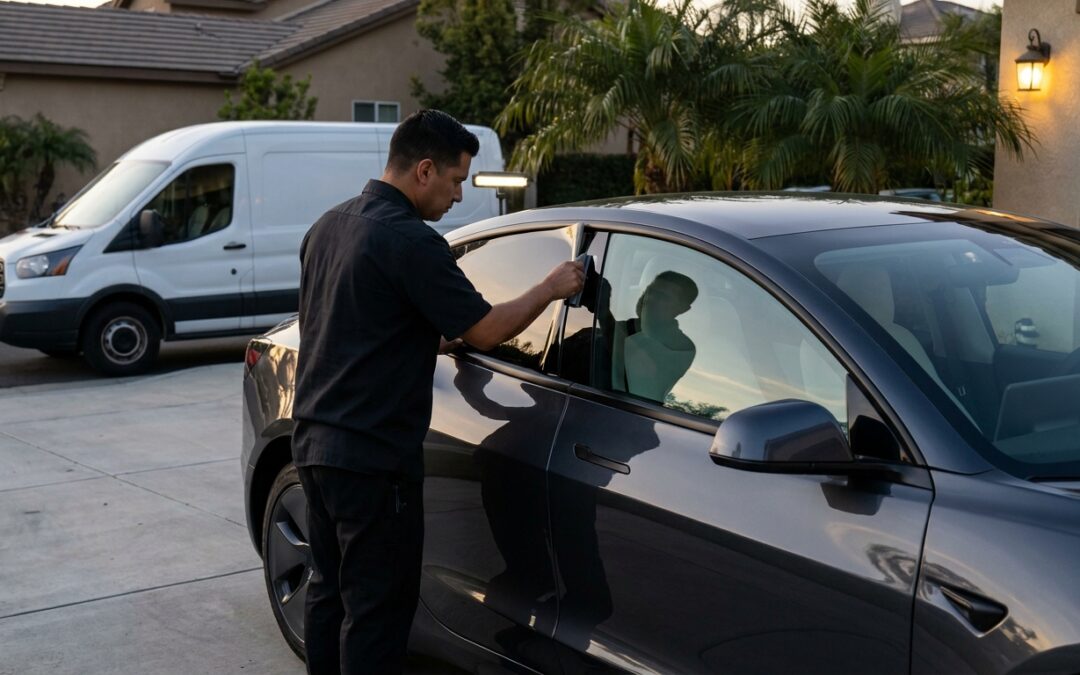
Upgrading your vehicle glass does not require spending hours in a shop waiting room. Legacy Mobile Tints delivers professional mobile window tinting directly to your home or workplace. Our skilled technicians bring high-performance carbon and ceramic films directly to you, completing clean, precise installations on-site.
We serve vehicle owners throughout Greater Los Angeles, including:
- Pasadena (explore our mobile car tinting in Pasadena)
- Glendale (explore our mobile car tinting in Glendale)
- Burbank
- Arcadia
- Alhambra
- Monterey Park
- Montebello
- South Pasadena
- San Marino
Whether you need a California-compliant setup featuring 50% front tint paired with 20% rear tint or full ceramic heat rejection, our mobile unit delivers accurate tinting with shades ranging from 50% down to 5%.
Is 20% Tint Worth It? Final Takeaway
Is 20% tint bad at night? On rear side windows and back glass, 20% tint is comfortable for most drivers, effectively cutting headlight glare while boosting privacy. On front side windows, 20% tint reduces visibility on dark roads, creates challenges when parking, and conflicts with California vehicle codes.
For optimal safety, style, and legal compliance, many local drivers pair a lighter legal shade on front side windows with a 20% shade on rear windows. Selecting premium ceramic film ensures high heat rejection and clear vision in low-light conditions.
Request Your Free Mobile Tint Quote
Ready to enhance your vehicle with professional carbon or ceramic window film? Legacy Mobile Tints brings expert mobile installation directly to your driveway or office parking spot in Pasadena, Glendale, Burbank, Arcadia, and surrounding cities.
Call us today at 818-605-5855 or visit our contact page to request your free mobile tint quote.