What Are The Legal Requirements For Window Tint In California In 2026?
Driving in Southern California means facing frequent sunlight, high interior cabin temperatures, and significant UV exposure throughout the year. For vehicle owners in Los Angeles, Pasadena, Glendale, Burbank, and surrounding areas, window tinting is one of the most effective upgrades available. Tinting reduces solar heat, protects interior upholstery from cracking, blocks radiation, and provides privacy.
However, California enforces specific regulations regarding automotive window film under its Vehicle Code. Installing tint that is too dark or applied to restricted glass can result in traffic stops or fix-it citations. Understanding state requirements allows you to upgrade your car, truck, or SUV confidently while remaining fully compliant on the road. Here is a clear overview of California window tint laws and how to choose the right film for your vehicle.
California Window Tint Regulations by Window Location
California law regulates window film based on Visible Light Transmission, commonly referred to as VLT. VLT is the percentage of visible light that passes through your vehicle glass and film combined. A lower VLT percentage means a darker shade, while a higher VLT percentage allows more natural light into the cabin. The state assigns different VLT requirements depending on the placement of the glass.
Windshield Tint Rules
California regulations regarding front windshields are strict. You cannot apply dark window tint across the full surface of your front windshield. Drivers are permitted to install a strip of transparent window film along the top four inches of the windshield, or above the manufacturer AS-1 line. This strip helps block glare from the sun without obstructing forward road visibility. Any shade applied to the upper portion of the windshield cannot be red, amber, or blue.
Front Side Windows
Front side windows, which include both the driver and front passenger windows, must maintain a clear view into the cabin for law enforcement safety. Under state law, front side windows must allow at least 70% VLT when combined with factory glass tint. Because factory automotive glass usually has a light built-in tint of around 70% to 80% VLT, adding dark film to these windows will make the vehicle non-compliant.
To reduce heat on front side windows without violating state laws, high-performance ceramic or carbon films with light shades are recommended. These advanced materials block heat and ultraviolet rays while keeping the visible light transmission within legal standards.
Rear Side Windows and Rear Windshield
California provides significant freedom for glass located behind the driver line. For rear side windows and the back window, there is no minimum VLT limit. You can install dark film shades down to 5% VLT, which is standard limousine tint, on these surfaces.
If you install tint on your rear windshield, California law requires your vehicle to have dual exterior side mirrors on both the left and right sides. These mirrors maintain adequate rearward vision regardless of how dark the back window is.
Reflectivity, Color, and Documentation Standards
In addition to shade darkness, California regulates the appearance and certified specifications of window film used on motor vehicles.
Prohibited Tint Colors and Reflectivity Limits
California law prohibits specific window film colors. You cannot use red, amber, or blue tint on any vehicle window. These shades interfere with light perception and can mimic emergency service signals.
Reflectivity rules are also strictly enforced. Window film cannot be more reflective than standard, untinted factory glass. Metallic or mirrored finishes that create strong reflections are prohibited because they create visual glare for oncoming drivers.
Compliance Certificates and Identification Labels
California law requires installers or manufacturers to provide documentation confirming that front window installations meet the required 70% VLT threshold. This can be accomplished through a signed certificate provided to the vehicle owner or a small, legible sticker positioned between the film and glass. Working with a professional installation service ensures that your film meets state standards and proper documentation is supplied.
Medical Exemptions for Window Tint in California
Drivers who suffer from medical conditions caused or aggravated by sunlight exposure may qualify for a medical exemption in California. Conditions such as lupus, sun allergies, or severe eye sensitivity can make standard lighting limits uncomfortable or unsafe.
To qualify for a medical exemption, you must possess a signed letter from a licensed physician or dermatologist. The letter must state the medical necessity for darker window film and recommend a specific darkness level. This documentation must remain in your vehicle at all times so it can be presented during a traffic stop.
Choosing Between Carbon and Ceramic Window Tint
Selecting high-quality window film allows you to maximize heat rejection while staying legally compliant. Legacy Mobile Tints offers carbon and ceramic films in shades ranging from 50% to 5% VLT. Review our tint options to learn more about the performance features of each material.
Carbon window tint utilizes carbon particles infused directly into the film layers. It delivers a rich, dark matte finish that will not fade or turn purple over time. Carbon film effectively blocks infrared radiation and solar heat, making it a reliable, long-lasting solution for daily driving.
Ceramic window tint represents the top tier of heat-rejection technology. Built with non-conductive ceramic nanoparticles, this film blocks up to 99% of damaging UV rays and extreme levels of infrared heat. Because ceramic technology relies on nanotechnology rather than dark dyes to block heat, you can apply a legally compliant 50% or lighter shade on your front side windows while still keeping your interior cool.
The Benefits of Professional Mobile Window Tinting
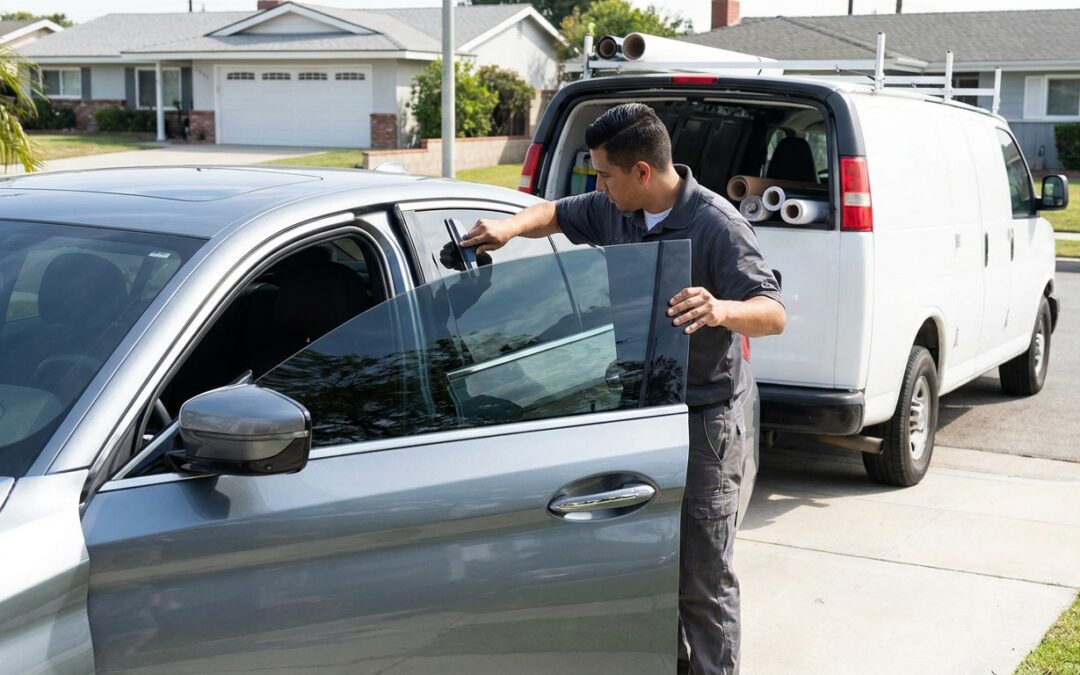
Getting your windows tinted does not require sitting in a shop waiting room. Legacy Mobile Tints delivers professional installation directly to your home or office location across the Los Angeles area. We proudly serve drivers in Pasadena, Glendale, Burbank, Arcadia, Alhambra, Monterey Park, Montebello, South Pasadena, and San Marino.
Our mobile setup ensures that your film is applied cleanly in a controlled, professional environment. Check out examples of completed installations by visiting our work gallery to see how different film shades look on various vehicle models.
If you live or work in the San Gabriel Valley or surrounding cities, our specialized services like mobile car tinting in Pasadena provide total convenience without sacrificing quality.
Request Your Mobile Window Tint Quote Today
Staying compliant with California window tint laws ensures comfortable driving, UV protection, and reduced glare without traffic delays or citations. Legacy Mobile Tints makes it simple to upgrade your vehicle with premium carbon or ceramic window film fitted at your home or office.
To request a free mobile tint quote or schedule your installation, call us directly at 818-605-5855 or visit our contact page today.