
Is $500 A Lot For Ceramic Tint?
If you are shopping for window tint in Southern California, you have likely received quotes ranging from two hundred dollars to over eight hundred dollars. When you see a quote around five hundred dollars, it is natural to pause and ask yourself: is $500 a lot for ceramic tint? The short answer is no. For a full vehicle installation using high-quality ceramic film, five hundred dollars is right in the average price range across the Greater Los Angeles area.
Understanding what you get for that price helps explain why ceramic tint costs more than traditional window films. Ceramic technology provides superior heat protection, glare reduction, and durability compared to standard dyed or basic films. When installed properly by a professional, a five-hundred-dollar investment in ceramic window tint pays for itself through increased driving comfort and interior protection.
Understanding Ceramic Window Tint and Its Cost
To determine if five hundred dollars is reasonable, it helps to understand what makes ceramic film different from other options on the market. Traditional window tints use dyes or metallic particles to block light. While dyed films darken your windows, they absorb limited heat and tend to fade or turn purple over time. Metallic films block heat better, but they can interfere with cell phone signals, GPS navigation, and satellite radio reception.
Ceramic window tint uses non-metallic, nano-ceramic particles that are invisible to the naked eye. These particles block infrared light, which is the primary source of solar heat inside your vehicle. Because ceramic film contains no metal or dye, it offers several distinct advantages:
- Maximum Heat Rejection: Ceramic films can block over 80% to 90% of infrared heat, keeping your car cabin significantly cooler.
- Full Signal Clarity: Since there is no metal content, ceramic film will never block keyless entry, 5G signals, Bluetooth, or GPS tracking.
- Superior UV Protection: High-grade ceramic film blocks up to 99% of harmful ultraviolet rays, protecting your skin and preventing interior leather and plastic from cracking.
- Long-Term Durability: Ceramic tint does not fade, bubble, or turn purple over time, making it a one-time purchase for the life of most vehicles.
You can explore different ceramic and carbon tint options to see how performance specs vary based on shade and material strength.
Key Factors That Affect Ceramic Tint Pricing
The total price for tinting your vehicle depends on several specific variables. A standard coupe will cost less to tint than a three-row passenger SUV simply because of the amount of glass and labor involved.
1. Vehicle Size and Glass Complexity
Larger vehicles require more material and more time to prep and install. A two-door car has fewer windows and simpler glass curves. On the other hand, a large SUV or station wagon has rear quarter glass, large rear windshields, and complex curves that require careful heat-shrinking during application.
2. Quality of the Ceramic Film
Not all ceramic films are identical. Entry-level ceramic films offer modest heat rejection, while top-tier nano-ceramic films block higher levels of infrared heat. Higher-rated films carry higher manufacturer costs, which reflects in the final price of the installation.
3. Professional Installation and Mobile Convenience
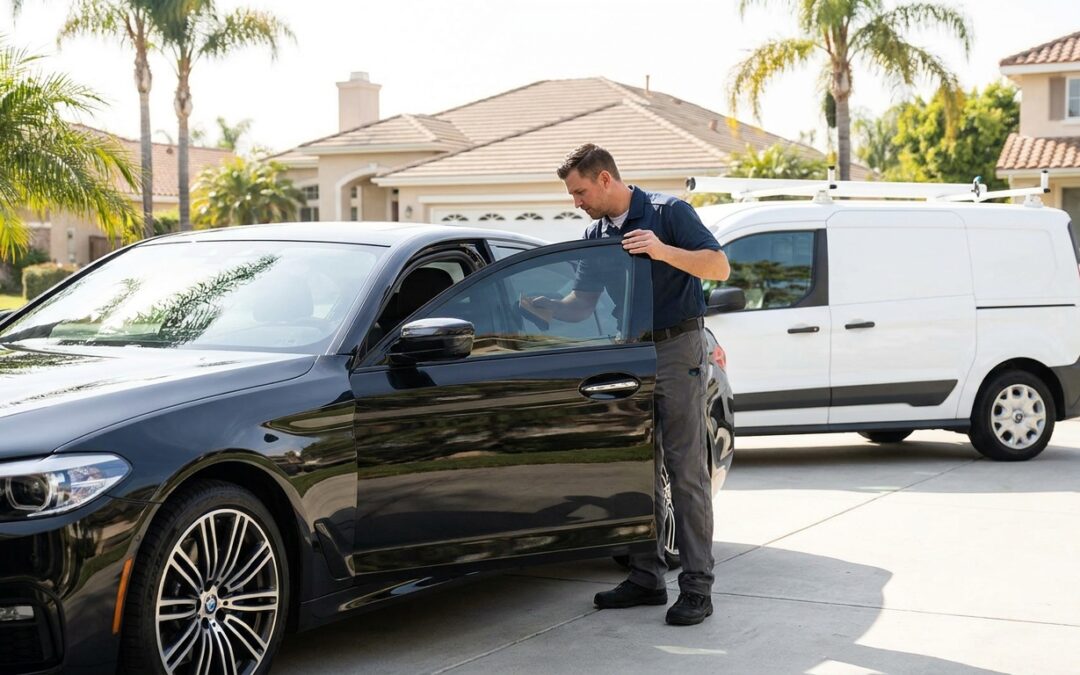
Window tinting requires a clean environment, precise hand-cutting or plotter-cutting, and experienced techniques to prevent dust, bubbles, and peeling edges. Choosing a specialized installer ensures the job is done correctly the first time. Mobile tinting services add value by coming directly to your home or office, saving you hours of waiting in a shop lobby.
For example, driver demand for mobile car tinting in Pasadena and surrounding cities has grown because customers prefer professional installation delivered to their driveway without disrupting their workday.
Is $500 Worth the Investment in Southern California?
Driving in Los Angeles County means dealing with constant sun exposure and high summer heat. If you park outdoors or commute daily through cities like Glendale, Burbank, Arcadia, or Pasadena, your car acts like an oven. Under direct sunlight, interior vehicle temperatures can climb past 120 degrees within minutes.
Paying five hundred dollars for ceramic tint provides direct everyday benefits for California drivers:
- Reduced Fuel and Battery Usage: By keeping the interior cool, your air conditioning system does not have to work as hard. In electric vehicles, reducing air conditioning reliance helps preserve driving range.
- Enhanced Driving Comfort: Ceramic tint reduces intense glare from the sun and headlights, making afternoon drives much easier on your eyes.
- Interior Preservation: Protecting your dashboard, door panels, and leather seats from UV damage maintains your vehicle resale value.
You can review examples of finished installations by browsing our recent work to see how clear, high-performing film improves a vehicle’s appearance and protection.
California Window Tint Laws to Keep in Mind
When investing in window tint, staying compliant with state laws ensures you avoid unwanted fix-it tickets. California tint laws set clear rules regarding how dark your window shade can be depending on the window location:
- Windshield: A non-reflective strip is permitted at the top four inches of the windshield. Full windshield tinting is generally restricted unless specific exemptions apply.
- Front Side Windows: Must allow at least 70% of light to pass through (70% VLT) when combined with the factory glass tint.
- Rear Side Windows: Any level of darkness can be used. You can choose shades ranging from 50% down to 5% dark tint.
- Back Windshield: Any level of darkness is allowed as long as the vehicle has dual side mirrors.
Ceramic tint is available in lighter shades (like 50% or 35%) and darker shades (like 15% or 5%). Because ceramic technology relies on nano-particles rather than dark dyes to block heat, you do not need extremely dark windows to achieve maximum heat rejection.
Carbon Tint vs. Ceramic Tint: Comparing Cost
If a five-hundred-dollar price tag is slightly outside your budget, carbon tint is a reliable middle-ground option. Carbon tint uses carbon particles to absorb heat, offering strong UV protection and a matte finish that will not fade over time.
Here is how the two options compare on average pricing and performance:
- Carbon Tint ($250 – $400): Great color stability, zero signal interference, moderate heat rejection. Ideal for drivers looking for stylish privacy and solid overall quality on a budget.
- Ceramic Tint ($400 – $700): Top-of-the-line performance, maximum infrared heat rejection, superior glare reduction, and long-lasting durability. Ideal for drivers looking for maximum cabin cooling.
While carbon tint performs well, spending the extra money for ceramic tint delivers significantly higher heat rejection, which makes a noticeable difference during warm Southern California summers.
Get Professional Mobile Ceramic Tinting Delivered to You
So, is $500 a lot for ceramic tint? Given the long-term durability, interior protection, and daily comfort it provides in the Los Angeles climate, $500 is a fair and standard price for a full vehicle application. It is an investment in your comfort every time you step into your car.
At Legacy Mobile Tints, we bring professional carbon and ceramic window tinting straight to your home or office. We serve clients across the Los Angeles area, including Pasadena, Glendale, Burbank, Arcadia, Alhambra, Monterey Park, Montebello, South Pasadena, and San Marino. Whether you prefer a subtle 50% shade or a dark 5% privacy shade, our expert technicians deliver flawless results on site.
Ready to upgrade your vehicle protection without losing hours at a shop? Call Legacy Mobile Tints today at 818-605-5855 or visit our contact page to request a free mobile window tint quote for your vehicle.