Should I Get My Front Side Windows Tinted 20% Or 15% In California?
Choosing the right shade for your vehicle windows is one of the most important decisions when upgrading your car. Drivers frequently ask whether they should choose 20% or 15% Visible Light Transmission (VLT) for their front side windows. Both options create a clean, dark appearance and reduce harsh road glare, but key differences exist regarding legal compliance, nighttime visibility, and overall privacy.
If you drive in the Los Angeles area, selecting the right window film requires balancing personal preference with local driving conditions and state regulations. Legacy Mobile Tints provides professional mobile installation across Pasadena, Glendale, Burbank, Arcadia, Alhambra, Monterey Park, Montebello, South Pasadena, and San Marino. We bring high-grade carbon and ceramic window films directly to your home or office. Below is a detailed look at how 20% and 15% tint shades compare so you can choose the best option for your vehicle.
Understanding California Window Tint Laws for Front Side Windows
Before installing window tint on your vehicle, reviewing state regulations is essential. California law maintains clear requirements regarding how dark front side windows can be.
What the Law Requires for Front Windows
Under California Vehicle Code, front side windows (the driver and front passenger windows) must allow at least 70% of light to pass through when combined with the factory window glass. Because most factory auto glass already has a light tint, applying almost any aftermarket film to front windows reduces visible light transmission below the legal 70% threshold.
How 20% and 15% Shades Compare to the Legal Standard
Visible Light Transmission (VLT) measures the percentage of light that passes through your window glass. The lower the VLT number, the darker the window shade:
- 20% VLT: Allows 20% of light into the vehicle cabin, blocking 80% of visible light.
- 15% VLT: Allows 15% of light into the vehicle cabin, blocking 85% of visible light.
Because both 20% and 15% shades are significantly darker than the legal 70% requirement, placing either shade on front side windows falls below California’s legal limit. Rear side windows and the back windshield on sedans, SUVs, and trucks do not have a dark limit in California, as long as the vehicle has functional dual side mirrors. Many drivers still opt for 20% or 15% on front windows for heat protection and privacy, but you should remain aware of enforcement in your local city.
Comparing 20% vs 15% Tint: Key Differences
While a 5% difference in light transmission sounds minor, it creates noticeable differences in everyday driving performance, exterior style, and interior privacy.
Exterior Appearance and Privacy
A 20% tint delivers a classic dark look. In bright daytime sunlight, people looking from the outside can see light shadows or outlines inside the car, but specific details remain hidden. It offers strong privacy without completely blacking out the window.
A 15% tint is noticeably darker. During daylight hours, it makes seeing into the cabin difficult for passersby. If maximum privacy for your personal belongings is your main goal, 15% offers stronger coverage than 20%.
Nighttime Driving and Sight Lines
Visibility at night is where drivers notice the biggest difference between these two options:
- 20% VLT at Night: Provides a reasonable balance. You can clearly read side mirrors and observe street corners in standard city lighting conditions.
- 15% VLT at Night: Significantly dims exterior light. On unlit neighborhood streets, dark highways, or during rainy conditions, looking through 15% front side glass requires extra caution when making turns or parking.
Glare Reduction and UV Protection
Both 20% and 15% film options block 99% of harmful ultraviolet (UV) rays. This protection prevents skin damage during long commutes and protects your vehicle’s interior dashboard, leather, and trim from cracking over time. Both options also block bright sun glare, reducing eye strain while driving through Southern California.
Why Film Material Matters: Carbon vs. Ceramic
Shade darkness is only one part of the window tinting equation. The material structure of the film determines how cool your vehicle cabin stays during hot summer months. Review our full range of tint options to see how different materials perform.
Carbon Window Film
Carbon window tint uses carbon particles embedded in the film. It features a sleek matte finish that will never turn purple over time. Carbon film effectively absorbs heat and blocks solar energy without using metallic layers, meaning it will not block cellular, GPS, or satellite radio signals.
Ceramic Window Film
Ceramic tint represents top-tier window film technology. Infused with non-conductive ceramic nanoparticles, this film specifically targets and blocks infrared light—the primary source of heat from the sun. A lighter ceramic tint can reject more heat than a very dark standard film. If heat reduction is your main goal, choosing a ceramic film in either 20% or 15% will keep your vehicle interior substantially cooler than standard tint options.
Mobile Window Tinting in Los Angeles
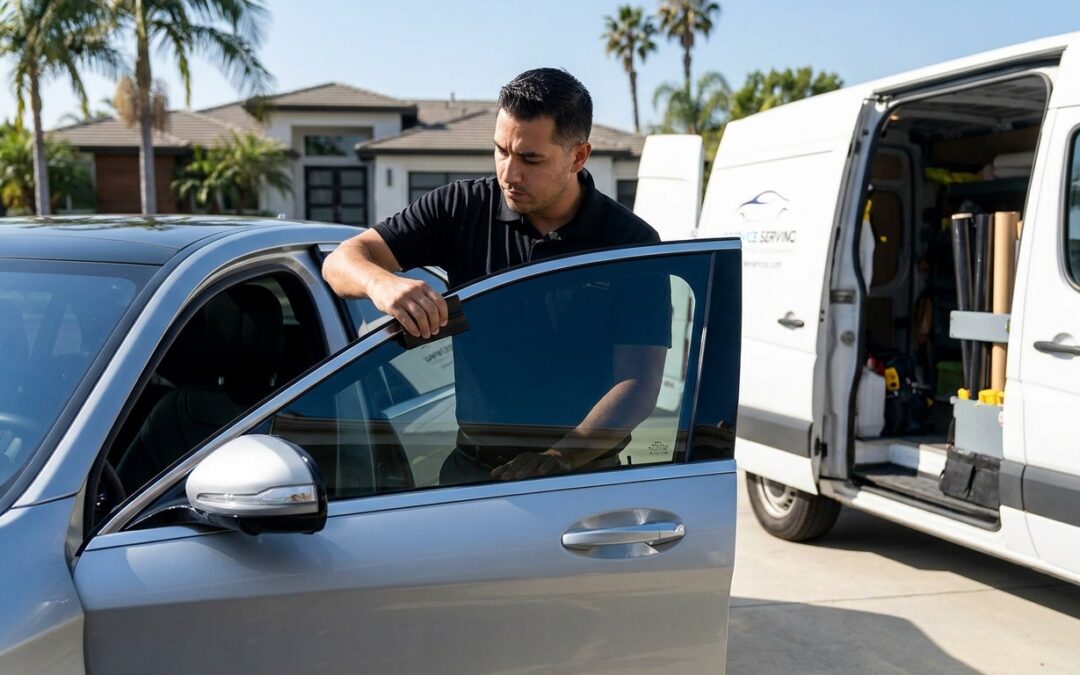
Taking time out of your day to sit in a waiting room at a physical tint shop is unnecessary. Legacy Mobile Tints brings high-quality installation straight to your driveway or workplace parking space. Browse photos of recent installs on our our work page to inspect our finished quality.
We provide full mobile service across the San Gabriel Valley and greater Los Angeles area, including:
- Mobile car tinting in Pasadena
- Mobile car tinting in Glendale
- Mobile car tinting in Burbank
- Mobile car tinting in Arcadia
We also serve drivers in Alhambra, Monterey Park, Montebello, South Pasadena, and San Marino. Our mobile units carry high-grade carbon and ceramic films in shades ranging from 50% down to 5%, ensuring you get the exact custom look you prefer.
Which Shade Should You Choose?
Making your final decision comes down to how you weigh visibility against daytime privacy:
- Select 20% Tint If: You want a dark aesthetic, strong glare protection, and safer, clearer visibility through your front side windows when driving at night.
- Select 15% Tint If: You prioritize daytime privacy, prefer a dark exterior appearance, and are comfortable driving with dimmer side-window visibility in low-light environments.
Schedule Your Mobile Tint Service
Ready to upgrade your vehicle with premium carbon or ceramic window tint? Legacy Mobile Tints handles the installation directly at your home or office location.
Call us today at 818-605-5855 or visit our contact us page to request a free mobile window tint quote for your car, truck, or SUV.