What Percent Tint Is Best For A Front Windshield?
Driving in the Greater Los Angeles area exposes your vehicle to continuous sunlight and intense heat throughout the year. While tinting side and rear windows is standard for many car owners, choosing to tint a front windshield requires careful thought. Drivers often ask: What percent tint is best for a front windshield? Balancing visibility, legal regulations, glare reduction, and heat rejection is essential when making this decision.
Legacy Mobile Tints provides professional mobile window tinting services directly to your home or office in Pasadena, Glendale, Burbank, Arcadia, Alhambra, Monterey Park, Montebello, South Pasadena, and San Marino. This guide explains how windshield tint percentages work, what California law permits, and which option fits your vehicle best.
Understanding Windshield Tint Percentages and VLT
Window tint darkness is measured by Visible Light Transmission, known as VLT. The VLT percentage indicates how much visible light passes through the glass and tint film. A higher percentage means a lighter tint, while a lower percentage indicates a darker tint that lets in less light.
Standard clear automotive glass allows roughly 70% to 80% of visible light to pass through naturally. When applying aftermarket film to a windshield, understanding the VLT rating helps you determine how much light will reach your eyes while driving.
Common VLT Ratings for Windshields
- 70% to 80% VLT: Nearly clear to the naked eye. This option provides high light transmission while blocking significant heat and solar radiation.
- 50% VLT: A light shade that reduces glare and slightly darkens the appearance of the glass without drastically reducing vision.
- 35% VLT: A medium shade that provides noticeable darkening and moderate privacy, but reduces nighttime visibility.
- 20% to 5% VLT: Dark to limo-style shades that block most visible light and create severe visibility challenges at night.
California Window Tint Laws for Front Windshields
Before selecting a tint shade, you must consider state regulations. California window tint regulations strictly govern what can be applied to the front windshield of a road vehicle.
Under California law, vehicle owners are permitted to apply a sun strip along the top four inches of the front windshield. This non-reflective strip helps block overhead sun glare without obstructing the driver’s direct forward view. Full windshield coverage with dark tinted film is prohibited on public roads unless the driver holds a documented medical exemption for light sensitivity.
However, many drivers opt for high-VLT ceramic films (such as 70% or lighter) across the full windshield. These clear or near-clear ceramic films block intense solar heat and ultraviolet rays while keeping light transmission levels high enough to maintain road safety and visual clarity.
Comparing Front Windshield Tint Percentages
Selecting the correct tint percentage depends on your primary goals, such as heat protection, glare reduction, or daytime driving comfort.
70% to 80% Tint: Best for Heat Rejection and Nighttime Clarity
For most daily drivers, a 70% to 80% tint film is the ideal choice for a front windshield. At this level, the film is almost invisible to observers and does not restrict your vision during night driving or rainy weather.
When combined with advanced ceramic film technology, an 80% or 70% film blocks over 90% of infrared heat and 99% of ultraviolet rays. This setup keeps your dashboard cool, reduces air conditioning load, and maintains clear optics in all driving conditions.
50% Tint: Best for Glare Reduction and Subtle Shading
A 50% tint percentage offers a moderate shade for drivers looking to reduce intense sunlight and headlight glare. It softens midday sun brightness and reduces harsh glare from oncoming traffic at night.
While 50% film alters the appearance of the glass slightly more than 70% film, it still allows decent visual clarity. Drivers who spend long hours on open highways during the sunniest parts of the day often prefer this option for added eye comfort.
35% Tint and Darker: Risks and Considerations
Installing 35%, 20%, or 5% tint across an entire front windshield is not recommended for street-driven vehicles. Dark windshield tint reduces visual acuity in dark environments, making it difficult to spot pedestrians, road hazards, or unlit street signs at night.
Dark windshield tint also attracts unwanted attention from law enforcement and increases the risk of receiving a fix-it ticket under state vehicle codes.
Why Film Type Matters: Carbon vs Ceramic
The percentage of light transmission is only half of the equation. The material of the tint film plays an equally important role in performance. When exploring carbon and ceramic tint options, ceramic technology stands out as the best match for windshield applications.
Ceramic Tint
Ceramic film uses microscopic, non-conductive ceramic particles to reject heat. Because it does not rely on dark dyes or metals to block heat, a 70% ceramic film can reject more heat than a 20% standard dyed film. It also avoids interfering with GPS signals, tire pressure monitors, or electronic toll passes.
Carbon Tint
Carbon film contains carbon particles that produce a smooth matte finish and prevent fading over time. It offers reliable UV protection and solid heat rejection. While carbon film works exceptionally well on side and rear glass, ceramic remains the preferred choice for front windshields due to its higher heat rejection at clear VLT levels.
Protecting Your Car Interior From Sun Damage
The front windshield is the largest piece of glass on your vehicle and allows the highest amount of solar radiation to enter the cabin. Prolonged sunlight exposure damages interior components over time.
- Dashboard Cracking: Direct thermal energy dries out vinyl, leather, and plastic trim on the dashboard.
- Upholstery Fading: UV rays break down dyes in leather and fabric seating surfaces.
- Electronics Overheating: Modern vehicle touchscreens and digital displays are vulnerable to high internal cabin temperatures.
Applying a high-performance ceramic film to your windshield forms a protective barrier against thermal energy and UV degradation, extending the life and appearance of your interior.
Mobile Windshield Tinting Services in Los Angeles
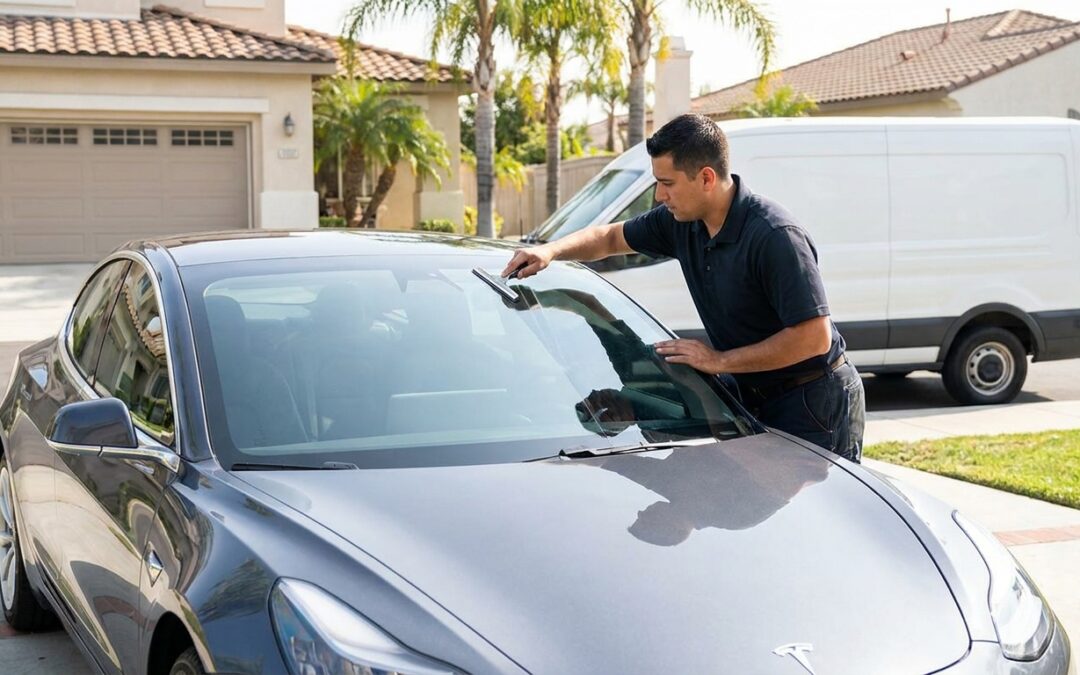
Installing film on a front windshield requires specialized skill. Windshields are large, curved, and located directly above sensitive electronic modules and dashboard wiring. Poor installation can lead to water leakage into vehicle electronics, air pockets, or distorted visual clarity.
Legacy Mobile Tints solves this problem by delivering professional installation directly to your driveway or workplace. Our technicians use precise heat-shrinking techniques and professional equipment to ensure a clean, bubble-free application.
We provide mobile service across the region, including mobile car tinting in Pasadena, specialized Glendale mobile window tinting, as well as service in Burbank, Arcadia, Alhambra, Monterey Park, Montebello, South Pasadena, and San Marino.
Summary: Which Tint Percentage Should You Choose?
To summarize the best choices for your front windshield:
- For maximum heat reduction and full night vision: Choose 70% or 80% ceramic film.
- For noticeable glare reduction and mild shading: Choose 50% film.
- For overhead sun blocking: Choose a 5% to 20% shade for the top 4-inch sun strip.
Request Your Mobile Tint Quote
Ready to keep your vehicle cool and protect your interior from California heat? Legacy Mobile Tints brings high-quality carbon and ceramic tinting straight to your location in shades ranging from 50% to 5%.
Call us at 818-605-5855 or visit our contact page to request your free mobile tint quote today.