
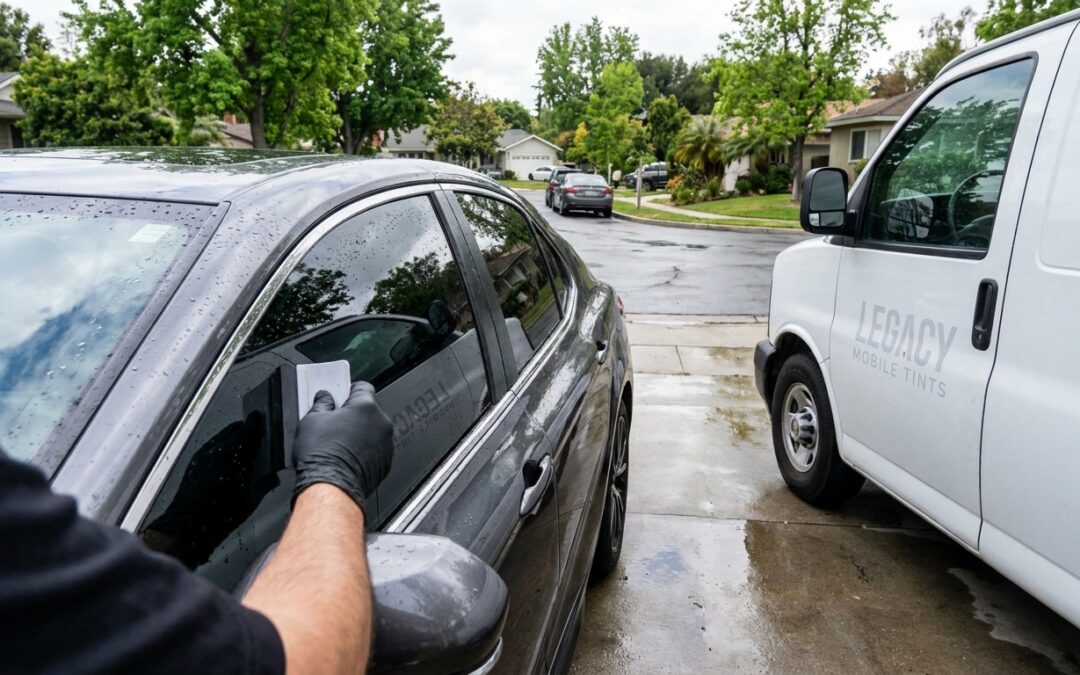
Is It Okay If It Rains After Getting Your Windows Tinted?
You just had professional window tint installed on your vehicle, and as you drive off or look out your window, dark clouds gather and rain begins to fall. Your immediate thought is likely concern. Will the rain ruin your new window film? Will the water cause peeling, bubbling, or streaking?
The simple answer is yes, it is completely okay if it rains after getting your windows tinted. Rain hitting the exterior of your car will not damage your new window tint. However, rain and humid weather do affect the time it takes for your tint to fully cure and dry. Understanding how window film is applied and how moisture impacts the drying process will give you complete peace of mind during rainy weather.
Does Rain Damage New Automotive Window Tint?
To understand why rain poses no threat to your fresh window tint, it helps to understand how window film is applied to your car.
Why Exterior Rain Doesn’t Affect Interior Film
A common misconception is that window film is applied to the outside of the vehicle glass. In reality, automotive window tint is applied strictly to the inside surface of your car windows. Professional installers place the film inside so that it is protected from harsh outdoor elements like wind, flying road debris, automatic car washes, and rain.
Because the tint is on the interior side of the glass, raindrops hitting the exterior glass have zero direct contact with the film or the adhesive holding it in place. The glass itself acts as a complete physical barrier between the weather outside and the film inside.
How Humidity and Rain Impact the Drying Process
While rain on the outside of your car will not wash away or ruin your film, overcast and rainy weather can alter the curing timeline. During installation, technicians use a water and slip solution to position the film properly on the glass. Squeegees are used to push out as much moisture as possible, but a thin layer of moisture remains trapped between the glass and the adhesive layer.
For the tint to bond permanently to the glass, that remaining moisture must evaporate completely. Heat and direct sunlight accelerate this evaporation process. When it rains, ambient humidity rises and sunshine is limited. As a result, the curing process slows down. Your tint will still cure fine during rainy weather; it simply takes a few extra days to dry completely compared to installation on a hot, sunny summer day.
Understanding the Window Tint Curing Process
Knowing what to expect during the curing phase helps you avoid unnecessary worry when looking at your windows after a job.
Water Bubbles and Haze: What Is Normal?
In the days following your tint installation, especially during cooler or wet weather, you might notice small water pockets, milky haziness, or a wavy appearance across the glass. This is a completely normal part of the curing process.
These visual imperfections are simply trapped moisture evaporating from beneath the film. As the water turns into vapor, it escapes through the microscopic pores of the film layer. Trying to pop these pockets or push them out yourself will stretch or tear the film. The best approach is patience. Allow the moisture to evaporate naturally over time.
How Long Tint Takes to Dry in Damp Weather
In warm, dry conditions, window tint generally cures within three to five days. However, when installation happens right before or during rain, the curing period can extend from two weeks to a month. As long as you do not disturb the film, the extended drying time will not impact the final quality or longevity of the installation. Check out our our work gallery to see examples of finished, fully cured installations.
Essential Post-Tint Care Rules (Rain or Shine)
Whether it is raining or sunny outside, following proper maintenance rules after your installation ensures your tint adheres perfectly and lasts for years.
1. Keep Your Windows Rolled Up
This is the most critical rule after getting window tint installed. Do not roll down your windows for at least three to four days after installation. If the installation took place during cold or rainy weather, consider keeping them rolled up for up to five to seven days.
Rolling down the glass before the adhesive has set creates friction between the top edge of the film and the rubber window seals. This friction can peel the film off the glass or roll the edges up, ruining the installation permanently.
2. Avoid Cleaning the Inside Glass
Resist the urge to wipe down the inside of your windows immediately after installation. Wiping wet or drying tint can shift the film out of alignment or create scratches on the soft top coat. Wait at least thirty days before cleaning your tinted windows. When you do clean them, always use an ammonia-free glass cleaner and a clean, soft microfiber cloth. Ammonia breaks down tint adhesives and will turn your dark film purple over time.
3. Keep Interior Moisture Away
While exterior rain is fine, interior moisture is something to manage carefully. On rainy days, moisture from wet shoes, coats, and umbrellas builds up inside the vehicle cabin. Keep your wet umbrellas off the seats and doors, and use your defroster to keep cabin humidity down so the inside glass stays dry.
Choosing the Right Tint Film for Southern California Weather
Southern California weather ranges from bright sun to wet winters. Choosing high-quality window film ensures optimal protection no matter what the weather looks like outside.
Carbon Tint vs. Ceramic Tint
When selecting film, understanding your options helps you pick the right performance level for your vehicle. Explore our full range of tint options to find the right match for your driving habits.
- Carbon Window Tint: Contains carbon particle technology that yields a sleek, matte finish. It will not fade over time, blocks harmful ultraviolet rays, and rejects a solid amount of solar heat without interfering with mobile device signals.
- Ceramic Window Tint: Represents top-tier window film technology. Infused with non-conductive ceramic particles, ceramic film blocks up to ninety-nine percent of infrared heat and ultraviolet radiation while maintaining clear vision through shades ranging from light 50% VLT down to dark 5% VLT.
California Tint Laws You Need to Know
Before selecting your window tint shade, it is essential to stay compliant with state traffic laws. Under California law, the rules for window darkness (measured in Visible Light Transmission, or VLT) are specific:
- Windshield: Non-reflective tint is allowed only on the top four inches of the windshield.
- Front Side Windows: Aftermarket film applied to the front driver and passenger side windows must allow at least 70% of light through when combined with factory glass tinting.
- Back Side Windows and Rear Window: Any darkness percentage can be applied to the rear side windows and the back window, provided the vehicle has dual side mirrors.
Mobile Window Tinting Built Around Your Schedule
Finding time to drive to a shop and wait hours for window film installation can be inconvenient, especially when rain is in the forecast. Legacy Mobile Tints solves this problem by bringing professional window tinting directly to your location.
Whether you need mobile car tinting in Pasadena, or service in Glendale, Burbank, Arcadia, Alhambra, Monterey Park, Montebello, South Pasadena, or San Marino, our technicians complete the job at your home or office. We carry high-grade carbon and ceramic tint options, delivering precise, professional results right in your driveway.
Get Your Free Mobile Window Tinting Quote Today
Rain or shine, high-quality window tint improves comfort, protects your vehicle interior from UV damage, and upgrades your car appearance. Legacy Mobile Tints makes the process effortless with reliable mobile service across the Los Angeles area.
Ready to upgrade your vehicle? Visit our contact page or call us today at 818-605-5855 to request a free mobile window tinting quote.