What Is The Highest Quality Window Tint?
When you decide to tint your vehicle, you quickly realize how many choices exist in the automotive market. From basic dyed films to advanced nano-ceramic options, the quality varies significantly from one product to another. Knowing what is the highest quality window tint helps you protect your investment, improve cabin comfort, and reduce interior damage caused by daily sun exposure.
The clear winner for top-tier performance is nano-ceramic window film. While high-grade carbon film offers great value and strong durability, nano-ceramic technology provides the highest heat rejection, UV protection, and optical clarity available. In this guide, we break down the primary types of window film, explain what makes ceramic the industry standard, and cover key California tint laws to help you make an informed decision.
Comparing Different Types of Automotive Window Film
To understand why ceramic film holds the top position, it helps to examine how window tinting technology has evolved over time. Four primary categories dominate the automotive market today.
Dyed Window Film
Dyed film is the most traditional and budget-friendly option. It works by layering dye between an adhesive layer and a protective top coat. While dyed film provides privacy and reduces general glare, it relies entirely on shade darkness to block heat. Over time, sunlight breaks down the dyes, causing the film to turn purple, bubble, or fade. It offers minimal heat rejection compared to modern alternatives.
Metallic Window Film
Metallic film uses tiny metallic particles embedded within the material to reflect solar heat away from your vehicle. While it provides better heat reduction than dyed film and increases glass strength, it carries notable drawbacks. The metal particles give windows a shiny, reflective appearance that many vehicle owners dislike. More importantly, metallic films can interfere with electronic signals, impacting cell phone reception, GPS navigation, and satellite radio signals.
Carbon Window Tint
Carbon tint replaced metallic film as a higher-grade alternative. Instead of metal or dye, it uses carbon particles mixed into the film layer. Carbon film creates a sleek, matte-black finish that never turns purple. It blocks significant heat and 99% of harmful ultraviolet rays without interfering with onboard electronics. For drivers seeking long-term durability and good heat reduction, reviewing high-grade tint options like carbon is a practical starting point.
Nano-Ceramic Window Tint
Nano-ceramic film is the highest quality window tint available today. It incorporates non-metallic, non-conductive ceramic micro-particles that are invisible to the naked eye. These particles selectively block infrared radiation, which is the primary source of solar heat felt inside a car. Ceramic tint achieves maximum heat block even in lighter shades, providing unmatched visual clarity, glare reduction, and overall durability.
Key Performance Factors That Define Quality Tint
Not all ceramic or carbon films perform the same. When evaluating premium window films, industry professionals look at specific performance metrics rather than just shade darkness.
Total Solar Energy Rejected (TSER)
TSER measures the total percentage of solar energy blocked by the window film. This metric combines visible light, infrared radiation, and ultraviolet rays. The highest quality window tints feature elevated TSER ratings, keeping your vehicle cabin cooler and reducing the burden on your air conditioning system during hot Southern California weather.
Infrared Radiation Rejection (IRR)
Infrared rays account for over half of the heat inside a car cabin. Standard dyed films block very little infrared heat, whereas top-tier nano-ceramic films reject up to 90% or more of infrared rays. This heat rejection technology allows even a light ceramic film to reject more heat than a dark, low-quality dyed film.
Ultraviolet (UV) Protection
Constant exposure to UV rays damages leather seating, cracks vinyl dashboards, and harms human skin. Premium carbon and ceramic films block 99% of UV-A and UV-B radiation. Installing quality film preserves your vehicle interior resale value and protects passengers on long drives.
Optical Clarity and Anti-Glare
High-quality films use premium optical-grade polyester. Inferior films distort the view through the glass, especially at night or under bright streetlights. Top-grade films maintain crystal-clear visibility from inside the vehicle while significantly reducing blinding glare from direct sunlight and headlight beams.
Understanding California Window Tint Laws
Before selecting your preferred shade, you must ensure compliance with state regulations. California window tint laws set specific limits on how dark your window film can be based on Visible Light Transmission (VLT). VLT refers to the percentage of visible light that passes through the film and glass combination.
Front Side Windows
California law requires front side windows (driver and front passenger) to allow at least 70% of visible light through when combined with the factory glass tint. This means applying dark tint shades like 5%, 15%, or 35% on front side windows does not meet legal standards.
Rear Side Windows and Back Window
For rear side windows and the back windshield, California permits any shade darkness level, including 50%, 35%, 20%, 15%, or 5% limo tint. However, if the rear window is tinted, the vehicle must be equipped with dual side mirrors.
Windshield Regulations
Drivers may apply a non-reflective tint strip across the top four inches of the front windshield. Full windshield tinting is generally prohibited without a certified medical exemption. However, many drivers choose clear ceramic film for full windshields to gain heat protection without altering glass color or reducing night driving visibility.
Why Professional Installation Is Essential
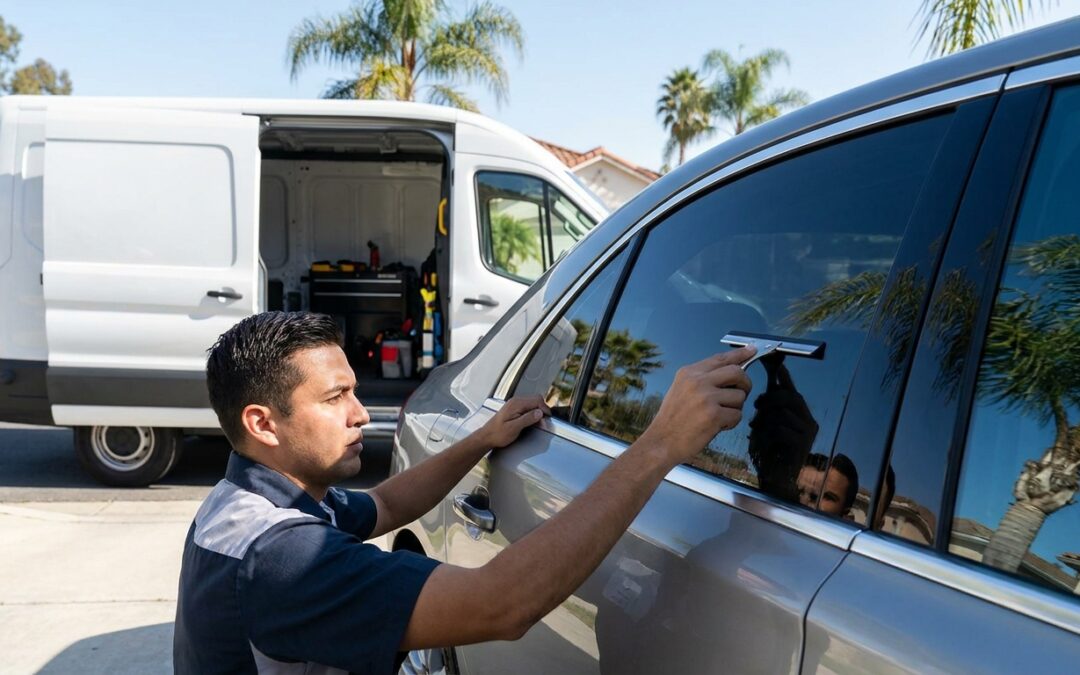
Even the highest quality nano-ceramic film will perform poorly if installed incorrectly. Dust contamination, uneven heat shrinking around curved glass, or imprecise cuts lead to peeling edges, air bubbles, and premature failure. Achieving a factory-style finish requires professional experience, correct tools, and clean application techniques.
For convenience, mobile window tinting brings professional installation directly to your location. Whether you need mobile car tinting in Pasadena, Glendale, Burbank, Arcadia, Alhambra, Monterey Park, Montebello, South Pasadena, or San Marino, having qualified technicians work at your home or office saves time while delivering precise results.
Checking real vehicle projects in our work portfolio allows you to see how clean edge cuts and micro-fitting enhance the overall appearance of luxury cars, trucks, and daily drivers alike.
Selecting the Right Tint Shade for Your Vehicle
Window film shade choice depends on your priorities regarding privacy, appearance, and legal limits. Quality carbon and ceramic films are available in a full spectrum of VLT percentages:
- 50% VLT: A light shade that reduces glare and solar heat while keeping the windows looking close to factory original. Excellent for drivers focused on heat reduction without dark windows.
- 35% to 20% VLT: A medium shade offering balanced privacy, modern styling, and comfortable cabin shading. Very popular for rear passenger seating.
- 15% to 5% VLT: A dark to extra-dark shade commonly known as limo tint. It offers maximum privacy for rear passengers and valuable cargo stored in the back.
Because nano-ceramic film relies on ceramic particles instead of dark dyes to block heat, you do not need extremely dark shades to stay cool. A 50% ceramic film rejects more solar heat than a 5% dyed film, allowing you to stay comfortable while keeping front windows readable.
Request Your Mobile Window Tint Quote Today
Legacy Mobile Tints brings premium carbon and ceramic window film installation directly to your home or office across the Greater Los Angeles area, including Glendale, Burbank, Arcadia, Alhambra, Monterey Park, Montebello, South Pasadena, and San Marino. Get high performance heat rejection, 99% UV protection, and clean installation without taking time out of your day to visit a shop.
Ready to upgrade your driving comfort? Call Legacy Mobile Tints at 818-605-5855 or visit our contact us page to request your mobile tint quote today.