Is Ceramic Tint Better Than Regular Tint At 35%?
When selecting window film for your car, shade level and film material are the two most critical factors. A 35% tint is one of the most popular choices among drivers across Southern California. It delivers a moderate, balanced look that reduces glare without making nighttime driving difficult. However, many vehicle owners ask whether upgrading to ceramic tint makes a noticeable difference when the shade darkness percentage remains identical to standard regular film.
The short answer is yes. Ceramic tint significantly outperforms regular film at 35% visible light transmission in almost every category, particularly in heat blockage, optical clarity, and long-term durability. To understand why, it helps to examine how these different film materials process solar energy and how they perform during daily driving in the Greater Los Angeles climate.
Understanding 35% Tint Shade and Visible Light Transmission
Window tint darkness is measured by Visible Light Transmission, commonly abbreviated as VLT. A 35% VLT film allows 35 percent of ambient light to pass through your vehicle glass while blocking the remaining 65 percent. This percentage refers strictly to how dark the window appears visually to the human eye.
A common misunderstanding among driver options is that a darker tint shade automatically rejects more solar heat. Darkness level only controls visible light. How much heat a window film rejects depends on the technology built into the material itself. A regular dyed film at 35% VLT will look almost identical from the outside as a ceramic film at 35% VLT, but their performance under direct sun is completely different.
Ceramic Tint vs Regular Tint at 35%: Key Differences
Regular window tint generally refers to dyed or entry-level metallic films. While dyed films darken your glass affordably, they rely on dark pigments to absorb light. Step-up options like carbon film offer better color stability, but ceramic technology sits at the highest level of performance window films. You can review our tint options to compare how different film materials compare for your vehicle.
Heat and Infrared Radiation Rejection
The most important distinction between regular film and ceramic film at 35% shade is solar energy rejection. Direct sunlight consists of visible light, ultraviolet rays, and infrared radiation. Infrared radiation is the primary cause of heat buildup inside your car cabin.
Standard dyed tint at 35% shade blocks very little infrared heat, often rejecting only 10 to 20 percent of solar heat. Carbon films improve on this performance, but ceramic film uses non-conductive, microscopic ceramic particles embedded across the film layers. A 35% ceramic tint can block up to 80 percent or more of infrared heat without needing a darker shade. In warm cities like Pasadena, Burbank, or Glendale, this performance gap is immediate. Your cabin stays significantly cooler, reducing your reliance on maximum air conditioning during summer traffic.
UV Ray Protection and Interior Preservation
Ultraviolet rays cause dashboard cracking, leather fading, and skin damage during long commutes. Both quality regular films and ceramic films provide strong protection against UV rays, blocking up to 99 percent of harmful UV radiation.
However, because ceramic film combines UV protection with high infrared heat rejection, it offers much better long-term protection for leather seats, custom trim, and modern touchscreen displays. Keeping interior cabin temperatures down prevents dashboard warping and reduces thermal strain on electronic modules inside the car.
Clarity, Glare Reduction, and Signal Interference
Optical clarity is another area where ceramic film excels over regular options. Lower-quality regular films can produce a slight haze, visual distortion, or a purplish tone over time. Ceramic film maintains crisp optical clarity from both inside and outside the vehicle, making night driving safer at 35% shade.
Older metallic regular tints were known to interfere with mobile phone signals, GPS navigation, and satellite radio reception due to microscopic metal particles in the film layers. Ceramic film uses non-metallic materials that never obstruct electronic signals, wireless phone charging, or keyless entry remotes.
Longevity and Resistance to Fading
Regular dyed tints rely on organic dye compounds that break down when exposed to harsh daily sunlight. Over a few years, dyed film often turns purple, bubbles, or peels away from the glass. Ceramic film relies on inorganic nano-ceramic particles that do not degrade under sun exposure. A 35% ceramic tint maintains its deep shade, structural integrity, and high heat rejection performance for as long as you own the vehicle.
California Tint Laws and 35% Shade
Before selecting 35% window film, it is crucial to understand state regulations. Under California window tint laws, legal limits depend on which windows you plan to tint on your vehicle.
For front side windows (driver and front passenger doors), California law requires a minimum visible light transmission of 70 percent when combined with factory glass tinting. Installing a 35% film on front side windows is darker than the state legal limit for front side glass.
For rear side windows and the rear windshield, California law allows any darkness level, provided the vehicle has functional side mirrors on both sides. Therefore, installing 35% ceramic tint on the rear side windows and back glass fully complies with California vehicle regulations. Drivers seeking privacy, heat reduction, and interior protection regularly select 35% shade for these rear windows.
Why Choose Mobile Window Tinting in Los Angeles?
Upgrading your vehicle window tint should fit your personal schedule. Driving to a retail shop, sitting in a waiting room for several hours, or coordinating rides back and forth wastes valuable personal time.
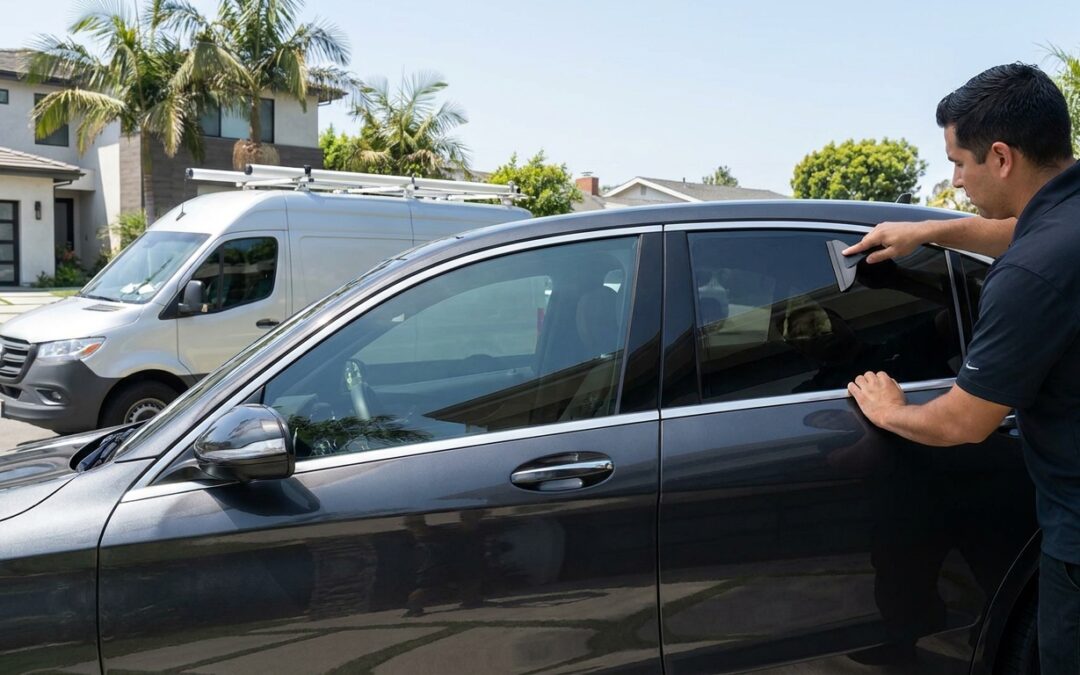
Legacy Mobile Tints eliminates this hassle by bringing clean, professional tint installation straight to your driveway or workplace parking space. Whether you need mobile car tinting in Pasadena, Glendale, Burbank, Arcadia, Alhambra, Monterey Park, Montebello, South Pasadena, or San Marino, our technicians perform precision installations on location.
Our mobile service unit carries high-grade carbon and ceramic films available in shades ranging from 50% down to 5%. You can check actual examples of completed installations on our work gallery page.
Summary: Is Ceramic 35% Tint Worth the Upgrade?
If your main focus is basic privacy on a strict budget, regular film provides a simple visual darkening. However, if you want solar comfort, effective cabin heat reduction, optical clarity, and long-term value, ceramic tint at 35% is far superior to regular tint. It delivers high heat rejection without requiring pitch-black windows that impair nighttime vision.
Request Your Mobile Tint Quote Today
Ready to upgrade your vehicle with premium ceramic or carbon tint? Legacy Mobile Tints brings expert installation straight to your home or office in the Los Angeles region. Keep your car cool and protect your interior without interrupting your day.
Call us today at 818-605-5855 or visit our contact us page to get a free estimate and schedule your mobile window tinting service.