Are Windshield Tints Legal In California? Standard Rules and Regulations
Driving in Southern California means dealing with intense sun exposure, bright daytime glare, and high summer heat. Whether commuting across the San Fernando Valley or navigating traffic through Los Angeles, window tinting is a practical investment to keep your vehicle cool and protect your interior from sun damage. However, state regulations regarding vehicle modifications are strict. Many vehicle owners frequently ask: are windshield tints legal in California?
Understanding state regulations before installing window film helps you avoid citations and keeps your vehicle compliant. This guide breaks down the legal limits for front windshields, side windows, and rear glass, while explaining how high-quality window film can protect your car within the boundaries of the law.
California Windshield Tinting Laws Explained
California Vehicle Code 26708 sets specific guidelines regarding what can and cannot be placed on vehicle windows. The state maintains strict policies regarding the front windshield to ensure drivers have an unobstructed view of the road at all times.
The Top 4-Inch Sun Strip Allowance
California law permits drivers to apply a transparent shade strip to the very top section of the front windshield. This strip cannot extend lower than four inches from the top of the windshield or below the factory AS-1 line marked on the glass, whichever is higher. This sun strip helps block direct glare from the sun without interfering with forward vision.
Full Windshield Tint Restrictions
Applying standard dark tint across the entire front windshield is illegal in California. Dark films in visible light transmission percentages such as 5%, 20%, or 35% cannot be legally installed over the main viewing area of the windshield. However, clear UV-blocking protective films may be permitted if they do not reduce light transmission below required statutory limits and do not distort the driver’s view.
Medical Exemptions for Windshield Tint
California law provides medical exemptions for individuals who require protection from sunlight due to specific medical conditions. Drivers who qualify with written documentation from a licensed physician or dermatologist may install clear or lightly tinted protective film on the front windshield and side windows. This medical note must remain inside the vehicle at all times to present to law enforcement officers during a traffic stop.
California Regulations for Side and Rear Windows
While front windshield rules are restrictive, California law outlines different standards for side and rear windows depending on their position on the vehicle.
Front Side Windows
The driver and front passenger side windows must allow at least 70% of light through when combined with the factory window glass. This measurement is known as Visible Light Transmission (VLT). Because most factory vehicle glass already has a slight tint, adding dark aftermarket tint to the front side windows usually drops the light transmission below the legal limit.
Rear Side Windows and Back Windshield
The rules for windows behind the driver offer maximum flexibility. California permits any level of tint darkness on the rear side windows and the rear windshield, provided the vehicle has dual exterior side mirrors that provide a view of at least 200 feet to the rear. You can install dark shades on these windows to maximize privacy and heat rejection.
Choosing the Right Window Film: Carbon vs. Ceramic
Selecting the right window film material impacts performance, visual clarity, and heat rejection inside your vehicle. Legacy Mobile Tints offers high-performance carbon and ceramic window film options designed to handle the Southern California heat.
You can view our complete breakdown of material specifications on our tint options page to find the right match for your vehicle.
Carbon Window Tint
Carbon window tint contains carbon particles that block solar heat and eliminate glare. Carbon film produces a sleek matte finish that will not fade over time. It offers reliable heat rejection and blocks harmful UV rays without interfering with cell phone, GPS, or radio signals.
Ceramic Window Tint
Ceramic window tint represents advanced window film technology. Infused with non-conductive ceramic nano-particles, ceramic film provides superior heat rejection by blocking infrared light. This allows ceramic film to reject high amounts of heat even in lighter, legal shades. Ceramic film protects your upholstery, reduces cabin temperatures, and delivers crystal-clear optical clarity day and night.
The Benefits of Professional Mobile Window Tinting
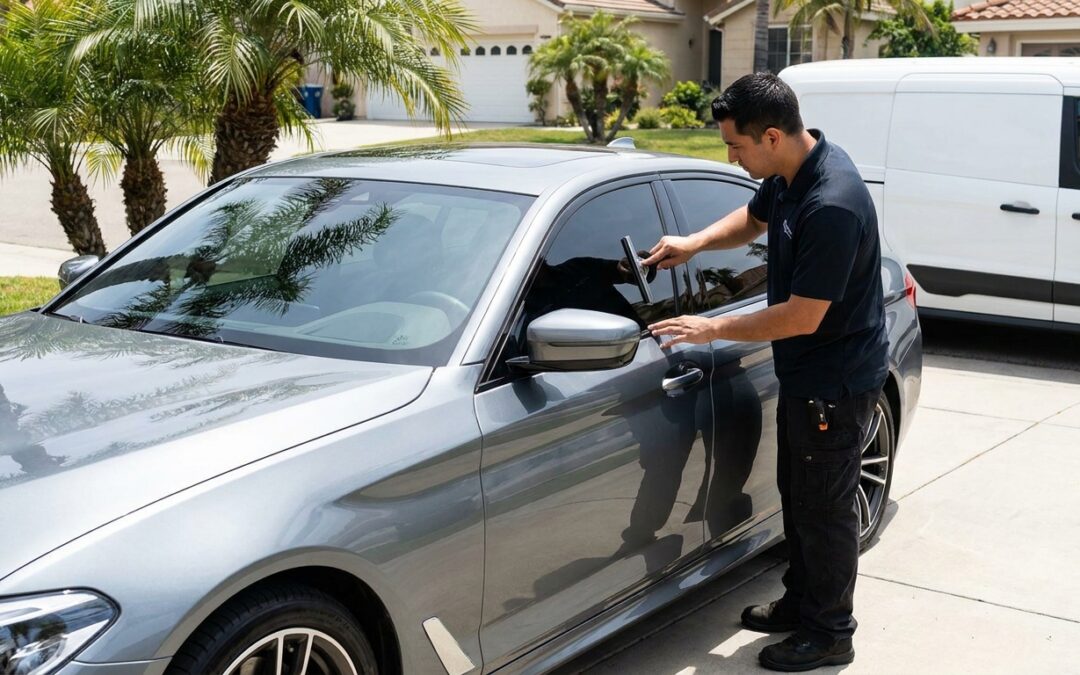
Taking your car to a physical shop and waiting in a lobby for hours takes valuable time out of your busy schedule. A mobile window tinting service brings professional equipment and expert technicians directly to your driveway or workplace parking space.
Legacy Mobile Tints serves vehicle owners throughout the greater Los Angeles region, providing precise window film installations on-location. Our technicians handle every vehicle with care, ensuring clean application without bubbles, peeling, or rough edges.
Our regular mobile service area includes:
- Pasadena
- Glendale
- Burbank
- Arcadia
- Alhambra
- Monterey Park
- Montebello
- South Pasadena
- San Marino
If you reside in the San Gabriel Valley, you can read more about our local services on our mobile car tinting in Pasadena page. You can also view recent completed projects by visiting our work gallery to see how various shade percentages look on different car models.
Frequently Asked Questions About California Tint Laws
Can you get a ticket for windshield tint in California?
Yes. Law enforcement officers can issue a citation if your front windshield has dark tint below the top 4 inches or if front side windows exceed legal darkness limits. In California, these citations are often issued as fix-it tickets that require removing the illegal film and having the vehicle inspected.
What is VLT in window tinting?
VLT stands for Visible Light Transmission. It measures the percentage of light that passes through your vehicle glass and window film. A lower VLT percentage means a darker shade. For example, a 5% film blocks 95% of light, while a 50% film lets 50% of light pass through.
Are reflective or mirrored window tints legal in California?
No. California law explicitly prohibits window films that are reflective or mirror-like on front, side, or rear windows. Additionally, films in shades of red, amber, or blue are strictly prohibited.
Request Your Free Mobile Tint Quote Today
Whether you need clear ceramic heat rejection for your front glass or full carbon tint for your rear windows, Legacy Mobile Tints brings high-quality window film installation directly to your home or office. We install premium carbon and ceramic window tints in shades ranging from 50% to 5% throughout Pasadena, Glendale, Burbank, Arcadia, Alhambra, Monterey Park, Montebello, South Pasadena, and San Marino.
Call Legacy Mobile Tints today at 818-605-5855 or visit our contact us page to request your free quote and schedule your mobile tinting appointment.